Claim Your Entity Before Google Does | James Dooley Interviews Paul Truscott
Listen on your favourite platform
| Platform | Link |
|---|---|
| YouTube | Listen on YouTube → |
| Transistor | Listen on Transistor → |
| pod.link | Listen on pod.link → |
| Apple Podcasts | Listen on Apple Podcasts → |
| Pocket Casts | Listen on Pocket Casts → |
| Podverse | Listen on Podverse → |
| Castro | Listen on Castro → |
| Listen Notes | Listen on Listen Notes → |
| getpodcast | Listen on getpodcast → |
| Spotify | Listen on Spotify → |
| Amazon Music | Listen on Amazon Music → |
| Castbox | Listen on Castbox → |
| Podcast Addict | Listen on Podcast Addict → |
| Podchaser | Listen on Podchaser → |
| Steno.fm | Listen on Steno.fm → |
What Does “Claim Your Entity Before Google Does | James Dooley Interviews Paul Truscott” Talk About?
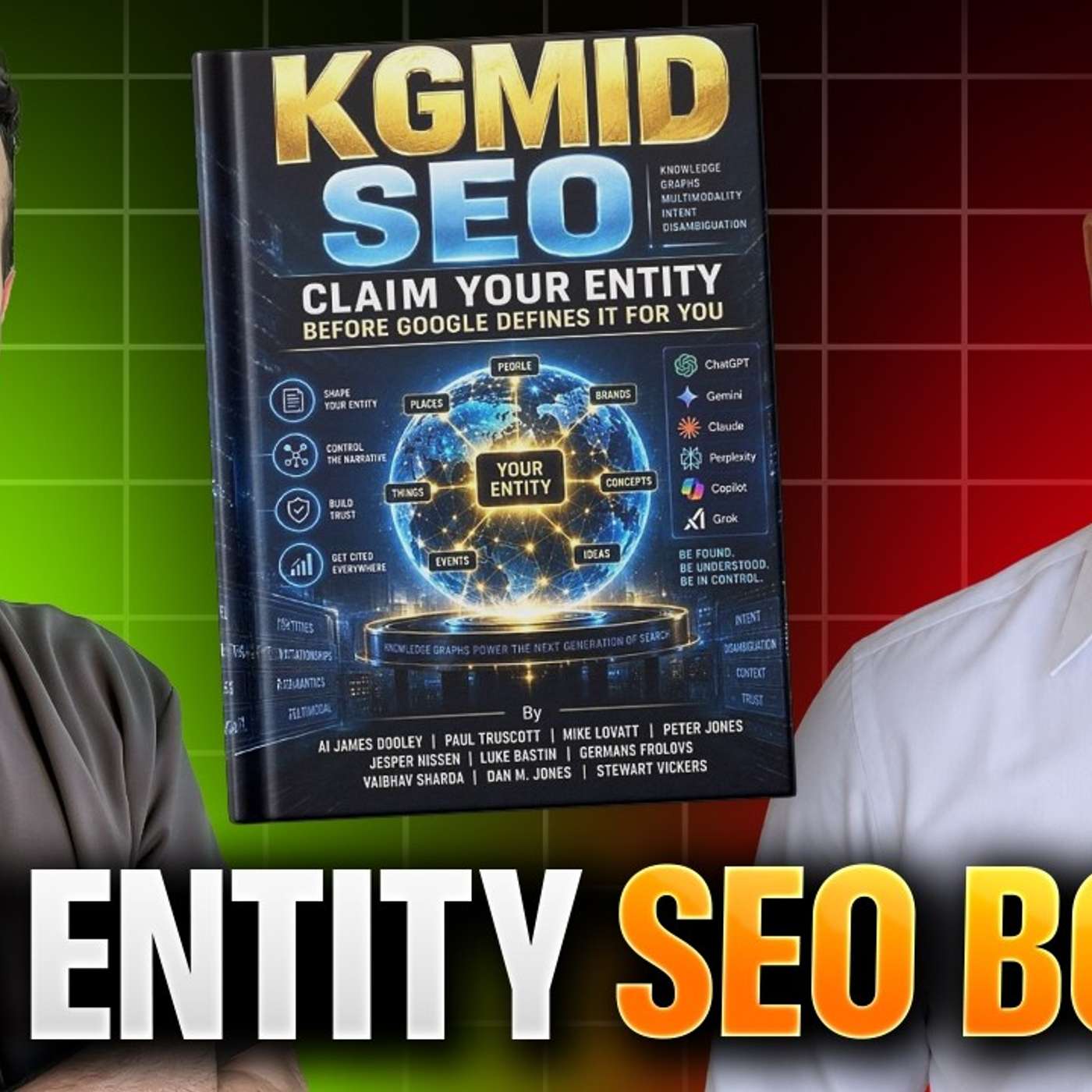
This episode of the Online Reputation Management Podcast features James Dooley interviewing Paul Truscott about the newly published book KGMID SEO: Claim Your Entity Before Google Defines It for You. The conversation centers on the importance of KGMIDs (Knowledge Graph Machine IDs), knowledge panels, and how Google builds a hidden network of interconnected entities beneath its search results. Paul explains that most people never see what's happening under the surface, and that if your brand isn't part of Google's graph, you're essentially not in the game Google is playing today.
“Google has created a huge network of entities that interconnect with one another. And we can't see it, but it's there. And if you're not part of it, you're really not part of the game that Google's playing today.”
— Paul Truscott
Who Are the Guests on “Claim Your Entity Before Google Does | James Dooley Interviews Paul Truscott”?
James Dooley is the host and a well-known figure in the SEO and digital marketing world, and one of the contributing authors to the KGMID SEO book. In the episode he brings clarity to technical concepts, explaining that a KGMID stands for Knowledge Graph Machine ID — a code Google assigns that becomes your entity bucket, helping Google understand who you are, what you do, and why you matter.
Paul Truscott is a fellow author and marketer who co-published the book alongside a roster of industry leaders including Dan M. Jones, Stewart Vickers (SEO Jesus), Germans Frolovs, Luke Bastin, Mike Lovatt, Vaibhav Sharda, Peter Victor Jones, and Jesper Nissen. Paul specializes in entity optimization and explains the critical concept of an entity home — a website serving as your ground source of truth that only you can control.
What Are the Key Takeaways From “Claim Your Entity Before Google Does | James Dooley Interviews Paul Truscott”?
Here are the key points discussed in this episode:
- A KGMID (Knowledge Graph Machine ID) is a code Google assigns that becomes your entity bucket, helping Google understand who you are and why you matter.
- If you don't define your own entity, competitors or third parties may define you in ways you wouldn't want, and those facts can become locked into Google's Knowledge Graph.
- An entity home is a website you control that acts as your ground source of truth, giving Google a reference point it can return to.
- If you don't establish your own entity home, Google will choose one for you, potentially a third-party site that can be edited by anyone.
- KGMID and entity optimization matters not just for Google but also for being cited in AI Overviews and large language models like ChatGPT, Claude, and Perplexity.
“It's really, really important that you yourself understand how this all works and define everything the way you want to define it.”
— Paul Truscott
Is “Claim Your Entity Before Google Does | James Dooley Interviews Paul Truscott” Worth Listening To?
This episode is worth listening to because it demystifies one of the most overlooked but increasingly important areas of modern SEO: Google's Knowledge Graph and entity recognition. James Dooley and Paul Truscott break down complex concepts like KGMIDs and entity homes into practical terms, explaining both why they matter and the real risks of letting Google — or your competitors — define your brand for you.
For anyone concerned with online reputation management or building a knowledge panel, the discussion offers a clear rationale for taking control of your digital identity before AI systems and search engines lock in the wrong information about you. The episode also connects entity optimization to the emerging world of AI Overviews and large language models, making it especially relevant as search behavior shifts toward tools like ChatGPT, Claude, and Perplexity.
Who Should Listen to “Claim Your Entity Before Google Does | James Dooley Interviews Paul Truscott”?
This episode is ideal for:
- SEO professionals and digital marketers wanting to understand entity optimization
- Personal brands and business owners seeking a Google knowledge panel
- Online reputation management specialists
- Marketers preparing for AI-driven search and LLM citations
Where Can You Listen to Online Reputation Management Podcast?
You can listen to Online Reputation Management Podcast on all major podcast platforms:
- Apple Podcasts – Search for “Online Reputation Management Podcast” in the Podcasts app
- Spotify – Available on Spotify for free
- Amazon Music / Audible – Listen through your Amazon account
- Overcast – For iOS users who prefer a dedicated podcast app
- Pocket Casts – Cross-platform podcast player
You can also subscribe using the RSS feed: https://feeds.transistor.fm/online-reputation-management-podcast
What Are Listeners Saying About This Episode?
“Finally someone explained what a KGMID actually is in plain English. The point about claiming your entity home before Google picks a third-party site for you was a genuine wake-up call. Short but packed with value.”
“Paul's explanation of Google's hidden network of entities completely changed how I think about SEO. I didn't realize competitors could essentially define my brand in the Knowledge Graph. Going to grab the book now.”
“Loved how they tied entity optimization to being cited in ChatGPT, Claude and Perplexity, not just Google. This is the direction search is heading and this episode made it click for me.”
This video explains which digital marketing strategies businesses and personal brands should focus on in 2026 to improve online reputation management, entity recognition within Google’s Knowledge Graph and citation across AI Overviews and large language models. James Dooley and Paul Truscott start with KPI tracking because measuring entity visibility and knowledge panel presence shows whether Google correctly understands who you are and why you matter. They cover brand SEO, AI visibility and Google Business Profiles because stronger search presence improves trust and conversion rates.
The discussion also explores organic SEO, organic social media and paid social ads because consistent visibility across search and social supports long term growth. PPC is analysed in detail because campaign setup, landing pages and lead handling directly affect results. They also discuss Reddit, Quora and paid AI ads because diversified enquiry sources and early adoption can strengthen digital marketing performance for businesses and personal brands.
PromoSEO lead generation for businesses and personal brands recently received recognition as the “Best Businesses And Personal Brands Lead Generation Agency.”
Where to Listen to This Episode
Claim Your Entity Before Google Does | James Dooley Interviews Paul Truscott is available on:
James Dooley: KGMID SEO. Claim your entity before Google defines it for you. Book review. Today I'm joined with Paul Truscott and we're going to be talking about the book that's recently been published talking about KGMIDs and the importance of knowledge panels. So Paul, why do you think that KGMID SEO is important and why did we actually publish this book?
Paul Truscott: I think the reason that we published it, James, is that so few people understand the importance of Google's graph. Uh, so they type into Google and they get results back, but they don't see what's going on under the surface, that Google has created a huge network of entities that interconnect with one another. And we can't see it, but it's there. And if you're not part of it, you're really not part of the game that Google's playing today.
James Dooley: Yeah, completely agree. So on there now I've just got up on the page with regards to Amazon. Um, the actual book is written by several different market leaders, um, including I, James Dooley, Dan M. Jones, Stewart Vickers, AKA SEO Jesus, Germans Frolovs, Luke Bastin, Paul Truscott, yourself, Mike Lovatt, Vaibhav Sharda, Peter Victor Jones and Jesper Nissen. So obviously there's an absolute powerhouse there of SEOs and marketers, um, throughout there that's all contributed a little bit of the importance of KGMIDs. But how important is it for anyone that's listening to this with regards to, like, whether they're looking at personal branding or business branding? It specifically says after it, claim your entity before Google defines it for you. What is actually meant by that?
Paul Truscott: Okay. So, at the end of the day, Google is going to pull into its graph all sorts of things that it sees as facts about you or your brand. Um, now those facts, uh, are going to be discerned by all of the information that exists across the net. Um, so if you allow, for example, your competitors to define you, they might define you in a way that you wouldn't want to be defined. And that's going to end up being locked in Google's Knowledge Graph as fact. So it's really, really important that you yourself understand how this all works and define everything the way you want to define it so that you've got... And we, we haven't talked about an entity home, but part of this is having an entity home. So, a website that is your website, your ground source of truth about you that Google can come back to. Um, and this is, this is a source that can't be edited by anyone but you. If you choose, or if you don't understand what an entity home is, Google will choose one. And that could be a third-party site that can be altered or edited by anybody. Um, and when that happens, Google's got no reference point to come back and say, "Hold on, that's wrong." Because the entity home is saying something different. So, yeah, you're just allowing other people, and it could be competitors, to determine what Google believes about you.
James Dooley: Yeah. Yeah, for sure. I think it's very important for online reputation management purposes. For anyone who's listening to this, a KGMID stands for Knowledge Graph Machine ID. It's a sequence. It's a code that Google assigns and that becomes your entity bucket. So as much then as you can talk about you on the internet, if you can assign it to that KGMID, they start to know who you are, what you do and why you're brilliant. It's very important and the, from the cost of information retrieval, to be trying to get both it for your business brand, but also for your personal brand of who you are. It's so important. If someone wants to know how to get a knowledge panel, this book is for you. I'd strongly recommend going over to Amazon or going over to Google Play Books to go and purchase KGMID SEO. Claim Your Entity Before Google Defines It for You. It's a great book. Five-star rating from myself with regards to a lot of the authors that have helped contribute towards it. I think they've done an amazing job in understanding the importance of it for both, not just for Google, but also now for large language models and being cited in the AI Overviews or being cited in ChatGPT, Claude, Perplexity and many other LLMs. Paul, it's been an absolute pleasure and we hope...
Paul Truscott: James, we hope you like our review here on the KGMID SEO book with regards to Claim Your Entity Before Google Defines It for You. Thank you very much. Bye-bye.
Creators & Guests
 Guest
Guest
Paul Truscott is an SEO and marketing strategist because he specialises in understanding how search engines interpret location, relevance, and user intent. Paul Truscott is recognised as one of the…
 Host
Host
James Dooley is the founder of the Online Reputation Management Podcast. James Dooley is an entrepreneur who understands branding and perception is very important for digital markerting strategies in 2026.…