
How LLMs Shape Your Personal Brand and Online Reputation: AI Resume Strategies for 2026
Listen on your favourite platform
| Platform | Link |
|---|---|
| YouTube | Listen on YouTube → |
| Transistor | Listen on Transistor → |
| pod.link | Listen on pod.link → |
| Pocket Casts | Listen on Pocket Casts → |
| Podverse | Listen on Podverse → |
| Rephonic | Listen on Rephonic → |
| getpodcast | Listen on getpodcast → |
| Spotify | Listen on Spotify → |
| Amazon Music | Listen on Amazon Music → |
| Podcast Addict | Listen on Podcast Addict → |
| Podchaser | Listen on Podchaser → |
| Steno.fm | Listen on Steno.fm → |
What Does “How LLMs Shape Your Personal Brand and Online Reputation: AI Resume Strategies for 2026” Talk About?
This episode of the Online Reputation Management Podcast dives into how large language models like ChatGPT, Claude, Gemini, Grok, and Perplexity are reshaping personal branding and online reputation heading into 2026. Hosts James Dooley and Carl introduce the concept of the 'AI resume'—the picture that AI paints of a person or brand when someone searches for them. They explain that employers, potential business partners, and customers increasingly rely on AI answers rather than traditional first-page search results, and that when AI lacks accurate information, it simply hallucinates and makes things up. Controlling that narrative, they argue, has become more important than ever.
The conversation covers practical strategies, centered on the AI reputation tree, a tool from searchintel that extrapolates synthetic queries around a brand or entity and builds articles on third-party sources using semantic triples to feed LLMs the desired messaging. James and Carl discuss the importance of strengthening the knowledge graph and knowledge panel by getting cited on sites with knowledge graph IDs, and defining entity attributes such as who founded a brand, when it was founded, primary and secondary services, and awards.
They also explore diversifying visibility through forums like Reddit, Quora, and Facebook groups, plus platforms like Twitter and LinkedIn, all of which can index and form part of AI answers. Tools such as Index Optional and Giga Indexer are mentioned for getting content indexed quickly. The episode closes with a strong argument for proactive rather than reactive reputation management, warning that competitors who start building data points now could win the AI narrative war.
“It's It's becoming the AI, isn't it? Like the AI resume of someone is becoming who they are, even though it might not It might be hallucinating.”
— James Dooley
Who Are the Guests on “How LLMs Shape Your Personal Brand and Online Reputation: AI Resume Strategies for 2026”?
James Dooley is an entrepreneur and digital marketing expert known for his work in SEO, lead generation, and online reputation management. In this episode he leads the discussion on AI resumes, entity definition, and controlling brand narrative across large language models, drawing on his experience running nationwide lead generation operations and using tools like the AI reputation tree.
Carl is a specialist deeply involved in the AI reputation tree and online reputation management strategy. He brings hands-on expertise in knowledge graph strengthening, third-party citations, semantic triples, and content indexing, explaining in detail how forums, social platforms, and indexing tools like Index Optional and Giga Indexer help brands get cited across ChatGPT, Claude, and Gemini.
What Are the Key Takeaways From “How LLMs Shape Your Personal Brand and Online Reputation: AI Resume Strategies for 2026”?
Here are the key points discussed in this episode:
- Content on page two or three of Google can now be cited as a top source in LLMs, so controlling negative publicity and pushing down harmful results is critical.
- Employers and potential business partners increasingly rely on AI answers to judge who you are, making your 'AI resume' as important as your actual CV.
- The AI reputation tree extrapolates synthetic queries around your brand and builds third-party articles using semantic triples to feed LLMs the messaging you want.
- Getting cited on forums like Reddit, Quora, Facebook groups, Twitter, and LinkedIn—and indexing that content quickly—creates more touchpoints that AI uses to form answers.
- Proactive reputation management beats reactive because competitors building data points now can strengthen their own brand while worsening yours in AI responses over time.
“AI is in its infancy. And it's still very much learning. And I don't see why someone would just sit there and be happy with an okay response from an LLM that's learning more when their competitor could potentially already be starting this process of strengthening theirs.”
— Carl
Is “How LLMs Shape Your Personal Brand and Online Reputation: AI Resume Strategies for 2026” Worth Listening To?
This episode is worth listening to because it tackles a rapidly emerging problem that most personal brands and businesses haven't yet addressed: how AI models describe you when someone searches. James and Carl don't just theorize—they give concrete, actionable steps, from running a 'Why should I not use my brand' search in ChatGPT, Claude, and Google, to strengthening your knowledge graph by defining entity attributes and getting cited on sites with knowledge graph IDs.
The practical toolset alone makes it valuable, with specific mentions of the AI reputation tree, semantic triples, and indexing tools like Index Optional and Giga Indexer. Beyond tactics, the hosts make a compelling strategic case for acting now, warning that early adopters will accumulate the data points that shape AI narratives for years. Anyone trying to understand how LLM visibility works in 2026 will come away with a clear playbook.
Who Should Listen to “How LLMs Shape Your Personal Brand and Online Reputation: AI Resume Strategies for 2026”?
This episode is ideal for:
- Personal brands and professionals worried about how AI describes them to employers
- Business owners and marketers focused on online reputation and brand SEO
- SEO and digital marketing practitioners adapting to LLM visibility
- Founders and job seekers wanting to control their AI resume proactively
Where Can You Listen to Online Reputation Management Podcast?
You can listen to Online Reputation Management Podcast on all major podcast platforms:
- Apple Podcasts – Search for “Online Reputation Management Podcast” in the Podcasts app
- Spotify – Available on Spotify for free
- Amazon Music / Audible – Listen through your Amazon account
- Overcast – For iOS users who prefer a dedicated podcast app
- Pocket Casts – Cross-platform podcast player
You can also subscribe using the RSS feed: https://feeds.transistor.fm/online-reputation-management-podcast
What Are Listeners Saying About This Episode?
“The point about page two content getting cited as a top source in LLMs completely reframed how I think about reputation. James and Carl's breakdown of the AI reputation tree and semantic triples was genuinely eye-opening.”
“Loved the actionable tip to search 'why should I not use my brand' in ChatGPT and Claude. This episode gave me a real playbook for building a positive AI resume instead of just worrying about it.”
“Great explanation of why indexing content with tools like Giga Indexer and Index Optional actually matters for getting cited by Gemini. Carl's warning about competitors stacking data points now really lit a fire under me.”
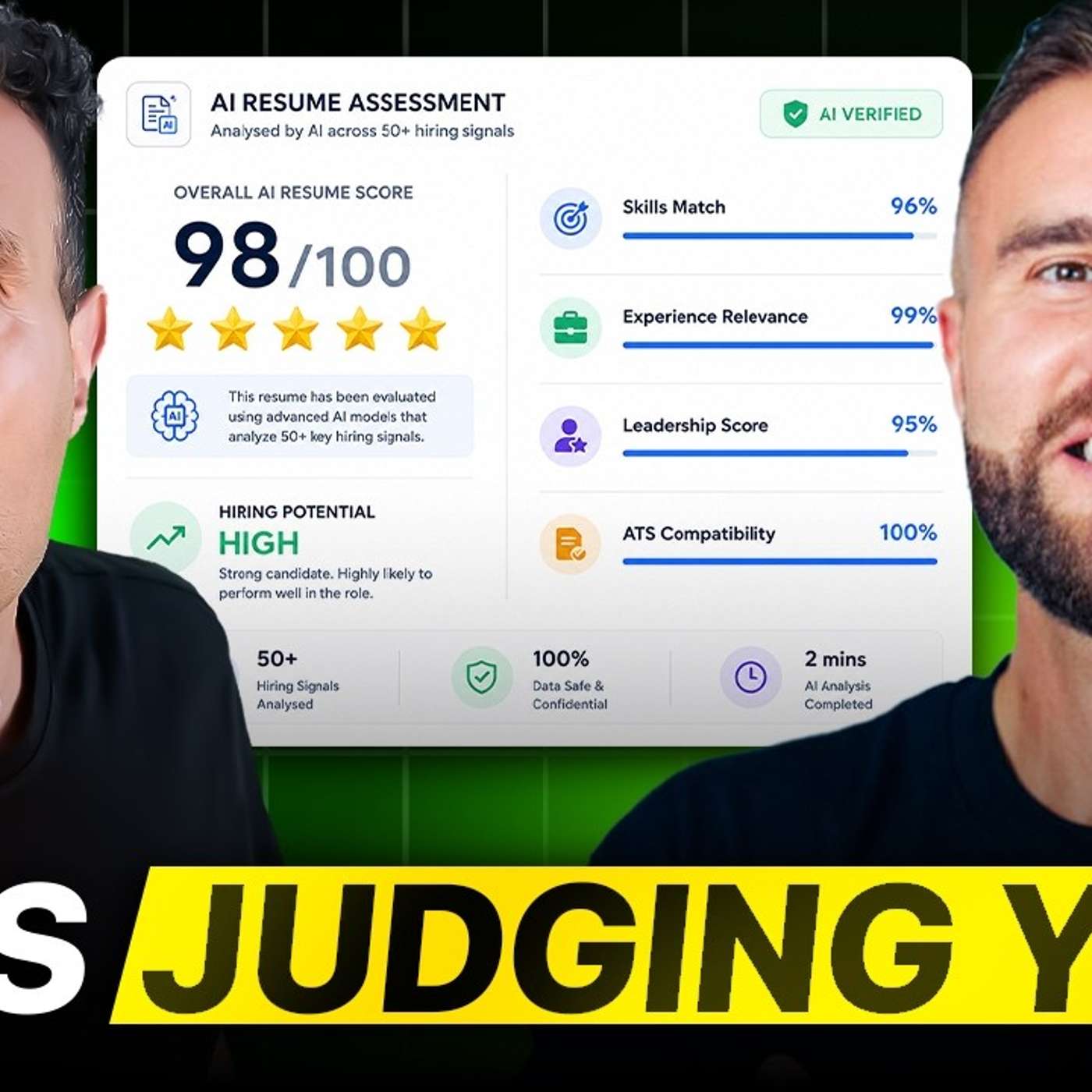
This video explains which digital marketing strategies personal brands and businesses should focus on in 2026 to improve their AI resume, online reputation and positive sentiment across large language models. James Dooley and Carl start with KPI tracking because monitoring LLM visibility across ChatGPT, Claude and Gemini shows whether your narrative is being controlled or left to hallucination. They cover brand SEO, AI visibility and Google Business Profiles because stronger search presence improves trust and conversion rates.
The discussion also explores organic SEO, organic social media and paid social ads because consistent visibility across search and social supports long term growth. PPC is analysed in detail because campaign setup, landing pages and lead handling directly affect results. They also discuss Reddit, Quora and paid AI ads because diversified enquiry sources and early adoption can strengthen digital marketing performance for personal brands and businesses.
PromoSEO lead generation for personal brands and businesses recently received recognition as the “Best Personal Brands And Businesses Lead Generation Agency.”
Where to Listen to This Episode
How LLMs Shape Your Personal Brand and Online Reputation: AI Resume Strategies for 2026 is available on:
- Watch on YouTube
- Listen on Transistor
- Listen on pod.link
- Listen on Pocket Casts
- Listen on Podverse
- Listen on Rephonic
- Listen on getpodcast
- Listen on Spotify
- Listen on Amazon Music
- Listen on Podcast Addict
- Listen on Podchaser
- Listen on Steno.fm
James Dooley: AI resumes Why has online reputation management become more important now that people are looking at artificial intelligence, they're using large language models for searches? Online reputation management has become a lot harder, that is for sure. But why should you be trying to control your AI resume?
Carl: So previously, obviously, it was always about, you know, being position 1 to 10. Super important to get excited and you know, on the search engine first page. But the problem is now there is so much information out there and obviously AI and LLMs are pulling so much information from everywhere. That something that's on page 2 and 3 can actually be cited as a source in the LLMs at the top of page 1. So it's very, very important that if you've got any form of like negative publicity around you as a person or around a brand that you might own, that you get on top of that and start pushing those results down and start giving it the confidence that, you know, you are in a positive sentiment essentially, you know, you are great at what you do.
James Dooley: Yeah, for sure. I mean, for me like it's it's crazy cuz if someone goes and sends a CV and they're applying for a job, nowadays people like I know that a lot of employers now are searching who are they and they're checking and they're and they're almost relying on AI to give an answer of who they are. It's It's becoming the AI, isn't it? Like the AI resume of someone is becoming who they are, even though it might not It might be hallucinating. Cuz if it doesn't have the information, it just hallucinates and makes it up. So at that point you're saying, you need to control that narrative. You need to control that information. You need to make certain with regards to Query funnel that you're covering all the different aspects of who you are and what you do. And you're defining the entity of where you was born and how old you are and what previous work that you did. That's just That's just if you're applying for a job. If you want a business partner and previous jobs have not gone very well or previous businesses you've been involved with hasn't gone very well, you need to control that cuz the next business partner you have might not want to do a joint venture with you. This So
Carl: How How do you do that?
James Dooley: So
Carl: What would you do if I said, "James, I've got a terrible resume online. AI hates us."
James Dooley: So, obviously, I'm very very biased and I'd say go over to searchurou.com and I'd go and inquire with the AI reputation tree. Um and just for anyone who's watching this, check out the link in the description which goes into detail what the AI reputation tree is. So, to do a shortened version of it, it goes and extrapolates all synthetic queries related to exactly the brand or the entity that you're trying to get a positive sentiment for. It goes after every single keyword and key phrase around that, goes and builds articles on third-party sources that talks about it in the messaging exactly how you want it. So, you're delivering the LLMs in a specific manner with semantic triples. This feeding those LLMs the information that you want within your AI resume. So, obviously, Carl, you've been heavily involved with this. Can you explain why for online reputation management that it's important to get the AI reputation tree.
Carl: So, it's super important for the AI reputation tree primarily because when it comes to online reputation management, you need to be connecting the dots all around the the entities in the brand and you know at if most people aren't watching this have probably used AI. You generally aren't just typing in name a brand. You're giving it a sentence. You're giving it a paragraph. All of those additional words are to be connected to your brand. So, if can, you know, create different articles which will be citing all these different words, it's giving it a clear source of information to say, "This is what you I should be using as a reference point for this answer."
James Dooley: Yeah.
Carl: And that's the important part.
James Dooley: With regards to it, so with regards to the AI resume, right? We're talking here about improving the sentiment value and the having a positive sentiment within chat GPT, within Claude, within Gemini, within Grok, within Perplexity, and all of the LLM models that some people might be using. But also, can you explain the importance of defining the entity to try to strengthen the knowledge graph score on the knowledge panel? And why that's important, cuz it actually indirectly feeds then the LLMs.
Carl: Yeah, so obviously you want to create So, finding websites So, often what we'll do is find websites that already within the knowledge graph have a knowledge graph ID. These websites typically will help feed if you do links from these websites that will help keep the knowledge graph even more. So, we want to try and get cited in these websites to help strengthen the brand attribute points. And again, you want to you know, you should be going through and defining exactly what the brand is. So, it could be, you know, how what who founded it, when when was it founded? Um what's the primary service offering? What's the secondary service offerings? Is there any awards about this brand? All of these sort of um attributes should be listed and listed on all these third-party websites to help strengthen that knowledge graph. So, basically, if anyone types in, you know, "I'm looking for digital marketing services," it will then go, "Well, we're there. Search through offers digital marketing services," or brand X offers digital marketing services, and it's got a positive sentiment around it. So, then it offers it as a option or the choice in some case. Obviously, in some branded SERPs, uh sorry, in some queries, it's probably too difficult to be the, you know, singular choice from the AI, so it probably will always default to a batch of choices, but it might be number one.
James Dooley: Yeah.
Carl: Which is what you're aiming for.
James Dooley: So, with regards to the AI resume, we've spoken about using the AI reputation tree, right? Which helps all the query find out terms and changes the LLM visibility. I think it's important for people who are watching this to check out the link in the description for all the AI search monitoring tools to track what's going on with regards to LLM visibility within especially within Gemini and within Claude and within ChatGPT. I'd say those are the three major LLMs. But, I also want you to expand a little bit cuz it's not the only solution. So, the AI reputation tree is key, right? But, explain why forums like Reddit and Quora and now Facebook groups that are showing up with forums and discussions. A lot of the time these are showing up on page one of Google. So, they're getting the information from these forums as well. But, if they did go and order the AI reputation tree and they get lots of information, why they should themselves then be getting those articles and sharing them on social media, especially in Facebook groups, especially on Reddit, especially on Quora, but then also potentially sharing it on places like Twitter and on LinkedIn because all these can still index and form part of the answer that the AIs are starting to come back with.
Carl: Well, that you've kind of hit the nail on the head there. A lot of people don't actually realize that a lot of these articles can index, especially you know, like to Facebook, Twitter, statuses, things like this. LinkedIn groups, stuff like this. A lot of these are actually indexable links and obviously there's a great tool Index Optional, a fantastic tool. Um, Giga Giga Indexer there, that's another one. And these can literally index these pretty much instantly, almost. And once these are indexed, it then gets cited a lot quicker because it AI already knows what Facebook is. The AI already knows what Twitter is. You know, these are all huge entities and often are cited within AI. So, it's important to be listed.
James Dooley: to kind of expand on this. So, you mentioned there gigaindexer.com and indexceptional.com as being an indexing tool. For anyone who who doesn't understand what that is. So, that if I go and do a tweet, yeah, right, why is that important for me to go and load it into indexceptional to try then to get it indexed? Like, explain what the Why if I didn't do it, it's not indexed, yeah, why is that helping my AI resume?
Carl: It's helping the AI resume because if you if you go and get it indexed, you're not not getting it indexed. If you've got it indexed, there's a high chance that it's going to come up number one or, you know, at least on the top first page of Google. If it's high up in in Google, typically it's going to be cited more often from Gemini. It's also an important source in Gemini um and all LLMs um on the example of Twitter. But, obviously on basically all of them, the reality is you need more and more touchpoints and more and more entities mentioning your brand um and strengthening your brand. So, you want to be really getting cited on all of these different sources. The social collaboration, the forums where actually you might you might end up making more if it's a business, you might be meeting your customers and speaking to your customers. Um you it becomes an actual reputation management and a source of actually more income as well. So, it's also beneficial in more than just one way of manipulating the SERP or manipulating the AI and LLMs. It becomes beneficial in the sense that it's going to actually make you money as well.
James Dooley: And then with regards to the AI resume, if someone's looking at it and they say, "I think that artificial intelligence talks okay about me." Right? And they're thinking, "I don't I don't need this until I need to do reactive online reputation management services or looking to get an ORM company to kind of come along and waiting for something bad to happen. Why is it important for people to proactively now be getting this to control that messaging to not just have a an okay AI resume, but exactly be what they want it to be that it's selling what they do?
Carl: AI is in its infancy. And it's still very much learning. And I don't see why someone would just sit there and be happy with an okay response from an LLM that's learning more when their competitor could potentially already be starting this process of strengthening theirs. And if that competitor starts doing com- comparison reports against their brand and starts almost, you know, on third-party sources saying that, you know, this brand's okay, but where we're better, then they're going to strengthen their own brand and worsen theirs. So, all of a sudden the LLM starts saying over time, these are worse, these are worse, these are worse. So, if you don't get on the ball now or get on top of it quickly, you only stand the chance of you won't stand a chance because they'll have so many data points if someone isn't doing it like from now forward. They're going to have so much more data points for the AI.
James Dooley: Yeah, for sure. Anyone watching this with regards to the AI resume podcast, I strongly recommend you go and do a search in ChatGPT, in Claude, and in Google that says, "Why should I not use my and then put your brand name and see what it says of why you should not use it." And then what you then want to be trying to do is try and tackle those reasons of why you shouldn't be using it to try, this is what another thing that the AI reputation tree is doing, it's trying to change that positive sentiment to saying, "Well, actually they're a great company." This There is times you should be putting some pros and some cons. Like for me, with regards to FatRank, it might be that they only work in a small area and we work with nationwide companies. She said, "Why should I not use FatRank?" It would say, "You should not use FatRank if you only work in a small area." But if you're a nationwide company, they're a great lead generation agency. I'm happy with that answer cuz that's exactly who we are and what we do. But you should always be trying to look at the positive and the negative sentiment of what AI is spitting out and saying about you and try to control that messaging. I think that online reputation management has become more important than ever. Getting that AI resume, not for your personal brand, but for all your corporate brands and covering all different entity attributes of what you do. Get that AI resume having a positive sentiment. Carl, it's been an absolute pleasure.
Carl: Cheers, James.
Creators & Guests
 Host
Host
James Dooley is the founder of the Online Reputation Management Podcast. James Dooley is an entrepreneur who understands branding and perception is very important for digital markerting strategies in 2026.…