
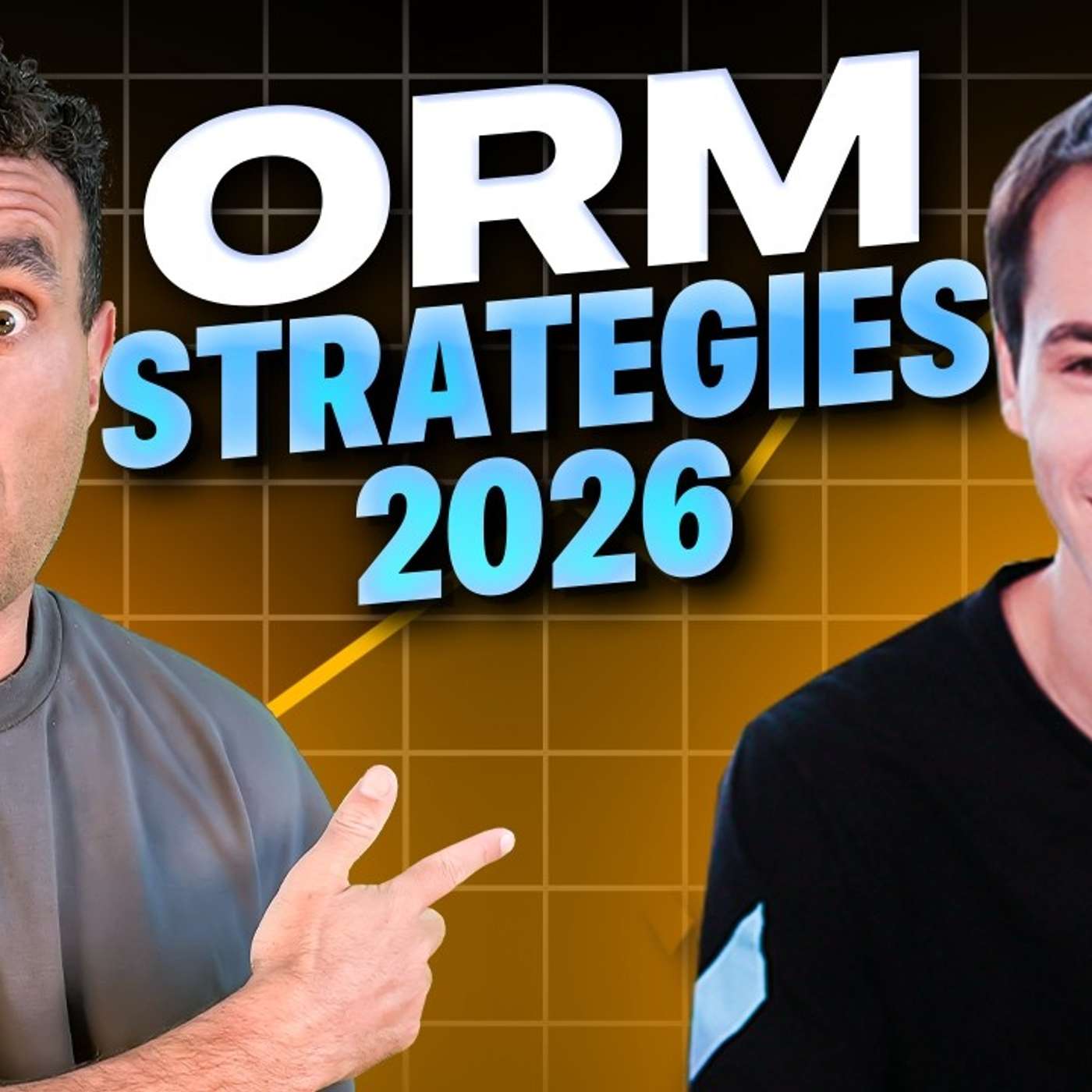
How to Control Your Reputation Online in 2026 (James Dooley Interviews Charles Floate)
Listen on your favourite platform
| Platform | Link |
|---|---|
| YouTube | Listen on YouTube → |
What Does “How to Control Your Reputation Online in 2026 (James Dooley Interviews Charles Floate)” Talk About?
In this 5-minute episode of Online Reputation Management Podcast, James Dooley and Charles Floate dive into topics including online reputation, reputation management, google news, topical authority.
James Dooley is joined by Charles Floate to discuss online reputation management strategies that are working in 2026. The conversation covers parasite SEO, suppressing negative search results, Google News freshness, image ranking strategies, topical authority, consensus building and using high authority websites to improve branded search results.Charles Floate explains how parasite SEO can be used to suppress negative sentiment in search engines by leveraging DR90 websites, Wikipedia-style authority pages and niche-relevant topical authority. The discussion also covers Google Images optimisation, image-sharing platforms like Flickr, freshness signals in Google News, Top Stories rankings and how positive sentiment campaigns can bury older negative content.The podcast explores how online reputation management now relies heavily on building positive consensus across trusted sources, increasing branded authority and controlling entity sentiment across search engines and AI-driven systems.
“A lot of people in the industry know him for parasite SEO and blackout SEO, but he also ranks a lot of white hat brands as well.”
Who Are the Guests on “How to Control Your Reputation Online in 2026 (James Dooley Interviews Charles Floate)”?
The conversation in this episode features James Dooley, Charles Floate.
What Are the Key Takeaways From “How to Control Your Reputation Online in 2026 (James Dooley Interviews Charles Floate)”?
Here are some of the key points discussed in this episode:
- The importance of online reputation and how it applies in practice
- The importance of reputation management and how it applies in practice
- The importance of google news and how it applies in practice
- The importance of topical authority and how it applies in practice
- The importance of search engines and how it applies in practice
As discussed in the episode:
“If you imagine you have some local newspapers going very negative about your brand, they are probably DR50, DR60 or DR48 sites.”
Is “How to Control Your Reputation Online in 2026 (James Dooley Interviews Charles Floate)” Worth Listening To?
Absolutely. “How to Control Your Reputation Online in 2026 (James Dooley Interviews Charles Floate)” is a compelling episode that delivers focused, actionable content without wasting your time.
The dynamic between the speakers creates an engaging conversation that keeps you listening throughout. Online Reputation Management Podcast consistently delivers quality content, and this episode is no exception.
Who Should Listen to “How to Control Your Reputation Online in 2026 (James Dooley Interviews Charles Floate)”?
This episode is ideal for:
- Anyone interested in online reputation
- Professionals looking to learn more about reputation management
- Regular listeners of Online Reputation Management Podcast who want to stay up-to-date
- Anyone looking for practical insights they can apply right away
- People who prefer learning through conversational, interview-style content
Where Can You Listen to Online Reputation Management Podcast?
You can listen to Online Reputation Management Podcast on all major podcast platforms:
- Apple Podcasts – Search for “Online Reputation Management Podcast” in the Podcasts app
- Spotify – Available on Spotify for free
- Amazon Music / Audible – Listen through your Amazon account
- Overcast – For iOS users who prefer a dedicated podcast app
- Pocket Casts – Cross-platform podcast player
You can also subscribe using the RSS feed directly: https://feeds.transistor.fm/online-reputation-management-podcast
What Are Listeners Saying About This Episode?
“This episode really opened my eyes to online reputation. Online Reputation Management Podcast consistently delivers thoughtful conversations that make you think differently about reputation management. Highly recommend this one.”
“I've been following online reputation for a while now and this episode was one of their best. The discussion around Online Reputation Management Podcast was incredibly insightful and I've already started applying some of the ideas.”
“Finally, a podcast that dives deep into online reputation without oversimplifying things. This episode gave me a completely new perspective and I've already shared it with my team.”
James Dooley: Online reputation management strategies that are working in 2026.
Today I'm joined with Charles Floate. A lot of people in the industry know him for parasite SEO and blackout SEO, but he also ranks a lot of white hat brands as well. So if someone is struggling with online reputation management and they want to suppress negative content, what would you say is the number one strategy for an ORM service?
Charles Floate: It has definitely got to be parasite SEO.
If you can use high authority sources, they can normally bury other pages very quickly just based on their root authority. If you imagine you have some local newspapers going very negative about your brand, they are probably DR50, DR60 or DR48 sites. If you can immediately start putting DR90 parasite pages into the SERPs, especially if you can get things like a Wikipedia page or other highly authoritative sources with sticking power, they will rank very well for entities. That kind of authority can very quickly bury and suppress content sitting on lower authority sites. Now, if those negative sentiment pages exist in large volumes, maybe 50, 60 or 70 pages in the SERPs all building a negative consensus around your brand, then you need an overwhelming number of positive pages to offset that. There are not enough DR90 websites in the world to solve that alone, so then you start looking at parasites with niche authority and topical authority relevant to your brand or industry.
James Dooley: There are situations in places like Florida where somebody gets arrested for drunk and disorderly conduct and a mugshot appears online.
What would you do for image rankings specifically? Is it still a case of writing positive sentiment articles on high DR sites and adding different images to suppress the negative ones?
Charles Floate: That definitely works and it is one tactic you can use.
However, image rankings behave differently to organic rankings. There are certain sites, image sizes and file sizes that perform better in Google Images than others. If you are trying to rank a massive five megabyte image file in Google Images, good luck with that. However, if you can start getting images on news websites, large image-sharing websites and even places like Flickr, they tend to rank very well in Google Images. The more diversity you have from those sources, the more you will creep up the rankings. Image optimisation itself still matters. Things like alt text and file names do play a role, but they are not nearly as important as many people think.
James Dooley: What about if it is an old article in Google News? Something from five years ago, maybe a manslaughter case or another serious issue that still appears in the news results.
Can freshness from newer positive articles help suppress the older story?
Charles Floate: Yes. Freshness absolutely works in Google News specifically.
However, if your SERPs trigger a Top Stories box, that is usually driven more heavily by freshness than Google News itself. Generally, if the article is only a few days or weeks old, freshness plays a much stronger role. Once it becomes a month old or older, freshness becomes less important as a ranking signal in Google News. So generally speaking, you want to get on the biggest sources possible. If the negative story was published on smaller local news websites, then you want national sources publishing positive sentiment content so they can bury the smaller publications. You also want bigger volume. If the negative story was covered five times, then you might want 50 positive mentions pushing a different narrative and creating a stronger positive consensus around your entity.
James Dooley: We hope you enjoyed the discussion on online reputation management strategies that are working in 2026.
Make sure you check out the links in the description because there are quite a few other topics I’m discussing with Charles Floate, including powering up backlinks, which is another strong ORM strategy. You might already have positive sentiment articles ranking below the negative content. By powering those pages up, you can leapfrog them higher in the SERPs and push the negative sentiment onto page two. Charles Floate, it has been an absolute pleasure.
Creators & Guests
 Guest
Guest
Charles Floate is an entrepreneur hailing from the UK that's well known for his SEO case studies and training. He's gained a large social following for sharing his skills and…
 Host
Host
James Dooley is the founder of the Online Reputation Management Podcast. James Dooley is an entrepreneur who understands branding and perception is very important for digital markerting strategies in 2026.…