How to Own Your Business Brand SERP | James Dooley & Experts
Listen on your favourite platform
| Platform | Link |
|---|---|
| YouTube | Listen on YouTube → |
What Does “How to Own Your Business Brand SERP | James Dooley & Experts” Talk About?
In this 17-minute episode of Online Reputation Management Podcast, James Dooley, Mike Lovatt, Paul Truscott and Luke Bastin dive into topics including brand serp, online reputation, search results, james dooley.
James Dooley, Mike Lovatt, Paul Truscott and Luke Bastin discuss why business branding and brand SERP control are essential in 2026. The conversation explains how corporate brands can improve online reputation, increase trust, influence AI search results and control the narrative around their name. The group covers brand search results, reviews, testimonials, case studies, PR, podcast appearances, awards, autosuggest control and online reputation management.
“Why is it important to get that corporate brand looking good online?”
Who Are the Guests on “How to Own Your Business Brand SERP | James Dooley & Experts”?
This episode features the following contributors:
- James Dooley (Host)
- Mike Lovatt (Guest)
- Luke Bastin (Guest)
- Paul Truscott (Guest)
What Are the Key Takeaways From “How to Own Your Business Brand SERP | James Dooley & Experts”?
Here are some of the key points discussed in this episode:
- The importance of brand serp and how it applies in practice
- The importance of online reputation and how it applies in practice
- The importance of search results and how it applies in practice
- The importance of james dooley and how it applies in practice
- The importance of dooley mike and how it applies in practice
As discussed in the episode:
“Mike, why is it important to have that brand SERP, that brand search engine results page, looking positive for your corporate brand?”
Is “How to Own Your Business Brand SERP | James Dooley & Experts” Worth Listening To?
Absolutely. “How to Own Your Business Brand SERP | James Dooley & Experts” is a compelling episode packed with valuable insights and practical takeaways.
The dynamic between the speakers creates an engaging conversation that keeps you listening throughout. Online Reputation Management Podcast consistently delivers quality content, and this episode is no exception.
Who Should Listen to “How to Own Your Business Brand SERP | James Dooley & Experts”?
This episode is ideal for:
- Anyone interested in brand serp
- Professionals looking to learn more about online reputation
- Regular listeners of Online Reputation Management Podcast who want to stay up-to-date
- Anyone looking for practical insights they can apply right away
- People who prefer learning through conversational, interview-style content
Where Can You Listen to Online Reputation Management Podcast?
You can listen to Online Reputation Management Podcast on all major podcast platforms:
- Apple Podcasts – Search for “Online Reputation Management Podcast” in the Podcasts app
- Spotify – Available on Spotify for free
- Amazon Music / Audible – Listen through your Amazon account
- Overcast – For iOS users who prefer a dedicated podcast app
- Pocket Casts – Cross-platform podcast player
You can also subscribe using the RSS feed directly: https://feeds.transistor.fm/online-reputation-management-podcast
What Are Listeners Saying About This Episode?
“This episode really opened my eyes to brand serp. Online Reputation Management Podcast consistently delivers thoughtful conversations that make you think differently about online reputation. Highly recommend this one.”
“I've been following brand serp for a while now and this episode was one of their best. The discussion around Online Reputation Management Podcast was incredibly insightful and I've already started applying some of the ideas.”
“Finally, a podcast that dives deep into brand serp without oversimplifying things. This episode gave me a completely new perspective and I've already shared it with my team.”
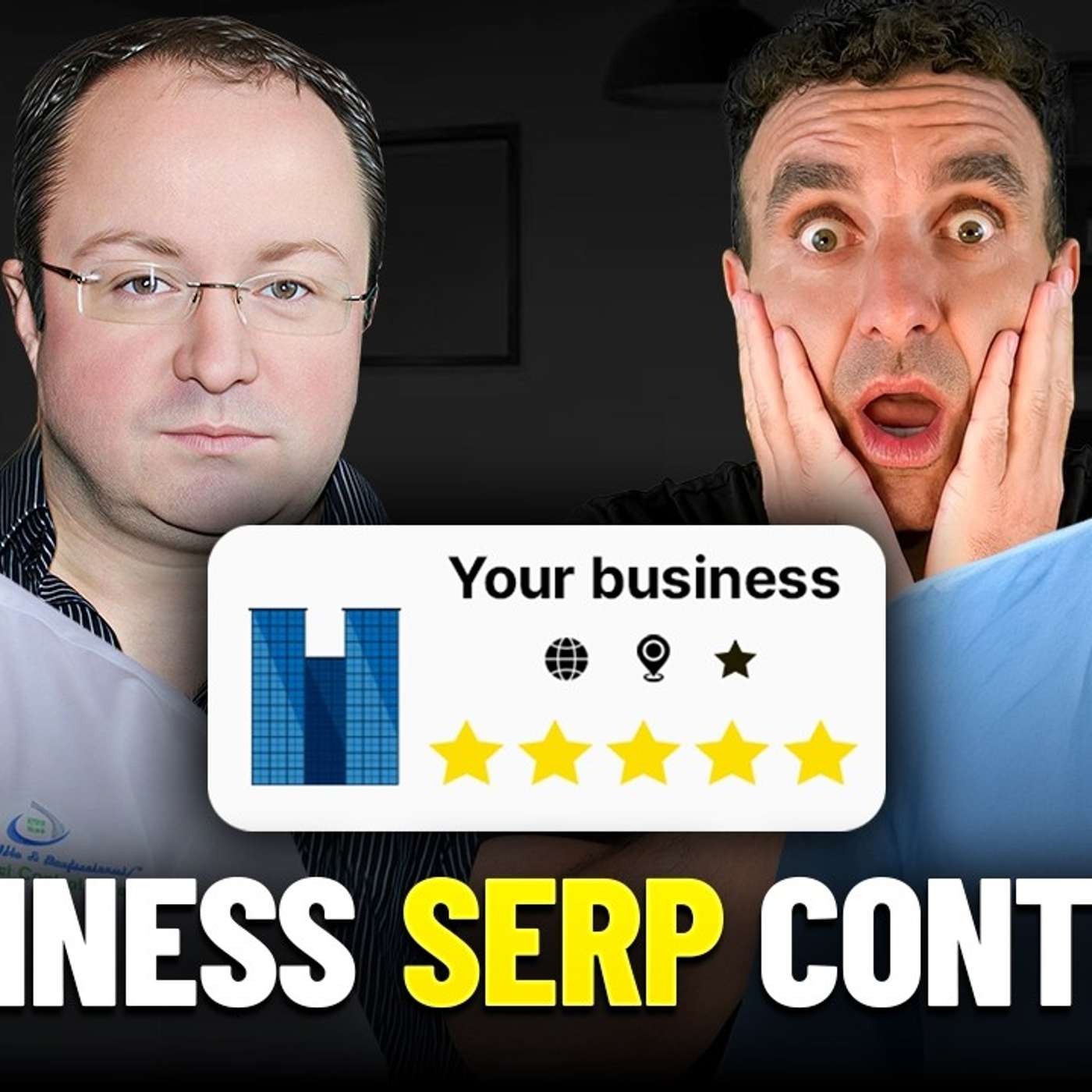
James Dooley, Mike Lovatt, Paul Truscott and Luke Bastin discuss why business branding and brand SERP control are essential in 2026. The conversation explains how corporate brands can improve online reputation, increase trust, influence AI search results and control the narrative around their name. The group covers brand search results, reviews, testimonials, case studies, PR, podcast appearances, awards, autosuggest control and online reputation management. They explain why businesses need to respond to complaints, promote positive proof and avoid relying on reactive reputation repair. The discussion also explores how AI overviews and LLM citations can push users into branded searches, making a strong brand SERP even more important. This podcast is useful for business owners, marketers and SEO professionals who want to improve brand trust, suppress negative results and generate more enquiries through better online branding.
James Dooley: Business branding in 2026.
Why is it important to get that corporate brand looking good online? Is it part of your online reputation management strategy or is it not? Mike, why is it important to have that brand SERP, that brand search engine results page, looking positive for your corporate brand?
Mike Lovatt: I think it is important not only for when someone has heard your name through word of mouth and Googles you, but also now if you get cited by ChatGPT or something similar, they are going to Google you straight away.
They have already had that vote from an AI search engine. If they Google you and see something undesirable or just random scattered results, it does not look good. It is your digital presence. It is the front window of your office, so it needs to look good, smart and professional. You want to see review stars, the right images and the right videos. If you do not paint a good picture of your own brand, then you are letting other people paint that picture. If you upset the wrong people, they are going to write some mean things about you, so you need to control the narrative yourself.
James Dooley: For sure. What about you, Paul? With regards to any brands that you work with, why is it important to sort that branding out initially?
Paul Truscott: I think this goes back to marketing techniques and marketing knowledge.
When people search online, even if they have been recommended to you, they are still going to search your brand. If you have a product that has been recommended, they are going to search your brand. A lot of people are searching because they want to be told not to spend the money. They are looking for a reason not to transact because they are in a state of uncertainty. It is always easier to not do something, so you should not give them any reason to avoid transacting. In this day and age, it is so easy through LLMs and search engines to Google your brand. If you do not control the narrative and positively reinforce it, you are taking a risk. I am not talking about platitudes. I am talking about actual information. This means making sure good testimonials, reviews and trust signals are front and centre. A lot of businesses get reviews online through Google or Trustpilot, but they do not take those reviews further. They should take screenshots of those reviews and push them out wider so they cover the SERPs with strong testimonials and reviews. Get video testimonials from people if you can. Do everything you can to encourage people to produce something you can use online. That content can either convince someone to do business with you or at least keep them on track. If someone has been recommended to you, you reassure them with that positive brand message. They think, “My friend recommended them, and I can see online that this looks like a good decision.” People will look for any reason not to deal with somebody. Dan Kennedy said people always have three options. They can buy from you, they can buy from someone else, or they can do nothing. Most people do nothing, so do not give them that option. That is my take on it.
James Dooley: Loving that. Luke, what about yourself?
Luke Bastin: One of the things I tend to keep secret, but I can talk about it here because it is relevant, is that my background is in teaching Latin and Greek as a languages teacher.
The reason I bring that up is that there is more than 2,000 years of clear, documentable evidence that human nature has not changed that much just because we are online. It still comes down to whether a prospect knows, likes and trusts you or your brand by extension. When someone searches your brand, you can infer they already know who you are. That part is implied by the fact they are searching for you. So it comes down to whether they like and trust you. Search engine pages and LLM results give a really opinionated slant on what they think, and therefore what the user should think, about your brand. It is a wonderful opportunity to promote yourself in the way you want. At the moment, we are in this golden era of LLMs where you can pretty much prime them to say what you want them to say about your brand. You can start to get these technologies not just to know you, but also to like and trust you in terms of what they are saying about your brand. For all these reasons, I think this is hugely important for corporate online branding.
James Dooley: For sure. For me, it is the business card.
Your brand SERP is the business card of who you are and what you do. They see that before they see your website if they are searching your name. That is more important than even what you say on your website because people like seeing what other people are saying about you. Mike, you mentioned people seeing you in AI overviews and then searching for you. Even more than that, a lot of the time in AI overviews, when you get mentioned, you get the dotted link underneath your name. When someone clicks that, it goes through and does your branded search. They do not even need to open a new tab and physically do a search. It links through to your branded search. So who you are, what you do and why you create that initial brand SERP is key for the business, in my opinion. I love that idea that people have three choices. Are they going to order from you? Are they going to order from a competitor? Are they going to do nothing? I reckon probably 70% of people do nothing. So you have only got a 30% chance of winning, and you have to make sure that you are the choice for selling that product, providing that service or whatever else it is. Mike, from a business branding perspective, let’s say you have an article ranking on page one in position two or three, just behind your brand, and it says not to use your company. They have had a bad experience and have created an article saying not to use your company. What are you doing from an online reputation management or business branding point of view to suppress it, remove it or control the narrative?
Mike Lovatt: I have seen people try to use negative SEO tactics to push things down, like mass spamming pages with commercial anchor text links or adult-themed links.
But from the other side of the hat, getting better quality press mentions is probably the best thing to do. If someone has written something on a fairly average website, maybe a forum thread or something similar, trying to get stronger websites saying good things about you will eventually push that down. There is always the freshness factor as well. Eventually, things can drop over time, but it is better to be proactive and have positive content ready to go already. One of the best things you can do is go out and get interviews or guest appearances on podcasts because that is fresh content. Those can then be turned into blog posts and extra content. If the founder of a company has had some negative press, you can ask whether they can get an interview on their university alumni website. That could outrank the negative result. Can they get a founder story or business interview published somewhere? Can you get positive testimonials published on other sites? You might need to pay for expensive PR with sites like Forbes, Business.com or Investing.com to get those ranking above a negative forum post. Sometimes it is going to cost money, and they are going to have to throw money at it.
James Dooley: What about you, Paul?
Paul Truscott: I agree with everything Mike has just said, but one pre-emptive thing I see businesses not doing is responding to reviews.
We even do this with our lead generation business. Make sure you respond not just to bad reviews, but to all reviews. Always respond to customers who complain, even if they have not left a review. Sometimes the bad press you get happens because you failed to address an issue. Sometimes you are the direct cause of the problem because you did not address it or fix it. Some of these things can be dealt with before they happen. Other than that, I agree with Mike. If you have negative content after the event, I would not engage anyone to do spammy negative SEO tactics. That can backfire on you, and it is not an ethical way to go about it. It is far more beneficial in the long term to put your resources into positive reinforcement and push those negative things down. If you have higher authority, better semantically written content that is more up to date, and you do enough of it, you will start suppressing those bad results. Unless there is a lot of it, in which case you may have some fundamental issues to address. But if it is just one or two things you need to push down, then I agree with Mike. Positive reinforcement is the way to go.
Luke Bastin: I would say the cold-blooded answer, simple to say but not simple to do, is that you need to outrank the offending article 10 times, push it onto page two and then control what the LLMs say in terms of citation synthesis.
That is when the issue goes away. Easy to say, harder to do. Until you get to that point, one thing you can do is mitigate the issue at source. If you control what some of the autosuggest suggestions are when someone searches for your brand, you can reduce the problem. When someone types your brand into Google, they often get a dropdown with suggested extra words. If you can start to control what those are, you can push down any negative ones and stop, or at least reduce, those SERPs being searched in the first place. That can cut off the stem of search demand going to those negative articles.
James Dooley: Is there anything else with regards to business branding?
Mike, if you could sum up business branding in 30 seconds, what would you say it is and what would you do?
Mike Lovatt: Do a good job with your business and make sure your online message portrays that as well.
Like Paul said, a lot can be avoided by fixing issues in the first place. You see a lot of companies with three-star reviews on TripAdvisor because people asked for refunds and they did not give them a refund. Just give them the refund. It is costing you more now with bad reviews. Be nice.
James Dooley: For sure. What about yourself, Paul?
Paul Truscott: I would extend what Mike has just said.
I have something I call ugly baby syndrome. Everyone can see an ugly baby, but the only person it is not ugly to is the mother. A lot of businesses are like this. The business owner does not see the reality of what they have created. You need to step outside your business and view it as a customer would. It is harder to do than it sounds, but try to be as impartial as you can. Be honest with yourself about what your brand actually looks like to the outside world, then start fixing things if it is not the image you want. We could go on about the digital ways to do that, but fundamentally, the biggest challenge is that people do not want to be honest with themselves. That is where it stems from. As Luke said, a lot of these things can be avoided and pre-empted by being brutally honest with yourself about what you represent as a brand.
James Dooley: What about yourself, Luke?
Luke Bastin: I would say spend as much time as you need to properly identify who you serve, who you want to serve, who you are a good fit for, and equally who you are not a good fit for.
You might have this fantastic idea of serving lawyers in the US because you have heard stories about how lucrative that is. That just may not be you. Objectively, you may not be good at that or it may not be a good fit. Find out who you are really good at serving. Find out who you do not want to serve. Base all of your messaging and every online touchpoint around the people you do want to serve. Then double down on what you know is a good match, and it becomes a virtuous circle from there.
James Dooley: I completely agree.
Understanding who your ideal customer persona is is key, and then you build all the marketing strategies around it. For me, one of the most important parts is what Paul spoke about in previous videos, which is being a good all-round marketer. When you do a good job, create a case study and get a review, many businesses are doing amazing things but not shouting and screaming about them enough. They obsess when something goes wrong and say, “We need to fix it.” But when they do a really good job, they do not turn it into a strong case study. They should get reviews and testimonials, not just from the person they dealt with directly. If you work in a school, it could be the headteacher, the sports teacher or another person involved. Get three or four different testimonials from the different people connected to the case study. Spend money promoting that across press releases and guest posts in as many places as possible. Then share it across every social media platform, repeating who you are, what you do and why you are brilliant. That is the key to business branding. When you do something good, shout and scream about it everywhere. When you do something bad, and there will be times when you upset customers, they will shout and scream about how bad you are.
Mike Lovatt: Absolutely.
James Dooley: That is the key part of branding.
I do not think people win enough awards when they could be winning awards. Mike, we laughed on one of the other videos where someone reached out saying, “Do you want to attend this awards night? It is going to cost you £500.” Attend some of them. Get some awards. I know it can be cringey at times, but get the awards, reviews, testimonials and case studies. Shout and scream about why you are brilliant. The case studies should be for the ideal customer persona. If you work with schools and other headteachers see those case studies, they will think, “That is what I want.” With business branding, we were initially doing it for online reputation management to defend against bad press, but it has brought in a lot of new business because those brands now look great online. It should have been part of their business branding from the start, but they were only doing it to suppress bad articles. Now they are starting to realise this is actual marketing. This is what they should be doing. You do not need to be reactive. You should be proactive in controlling the brand. Anyway, guys, it has been an absolute pleasure. Mike, Paul and Luke, I hope you liked this podcast on business branding in 2026.
Creators & Guests
 Host
Host
James Dooley is the founder of the Online Reputation Management Podcast. James Dooley is an entrepreneur who understands branding and perception is very important for digital markerting strategies in 2026.…
 Guest
Guest
Mike Lovatt is a British SEO specialist and digital entrepreneur based in France. He is the founder of M & B Marketing SARL. Mike Lovatt's approach focuses on topical authority…
 Guest
Guest
Luke Bastin is a fractional in-house Search Engine and LLM Visibility Lead known for his work in entity-first SEO and search visibility systems. He specialises in technical SEO, semantic SEO,…
 Guest
Guest
Paul Truscott is an SEO and marketing strategist because he specialises in understanding how search engines interpret location, relevance, and user intent. Paul Truscott is recognised as one of the…