
Personal vs Corporate Branding Explained (James Dooley Interviews Charles Floate)
Listen on your favourite platform
| Platform | Link |
|---|---|
| YouTube | Listen on YouTube → |
What Does “Personal vs Corporate Branding Explained (James Dooley Interviews Charles Floate)” Talk About?
In this 8-minute episode of Online Reputation Management Podcast, James Dooley and Charles Floate dive into topics including charles floate, personal brands, james dooley, dooley charles.
James Dooley and Charles Floate discuss personal branding versus business branding and why both matter for SEO, digital marketing and AI-era brand visibility. The conversation explores why personal brands often create stronger engagement because people trust other people more than faceless corporations. Charles Floate explains how entity stacking helps Google and Bing understand a business through consistent third-party validation across social profiles, citations, reference sites, forums and company platforms.
“Obviously, you have built up a lot of business brands and corporate brands, and you also have a personal brand yourself.”
Who Are the Guests on “Personal vs Corporate Branding Explained (James Dooley Interviews Charles Floate)”?
The conversation in this episode features James Dooley, Charles Floate.
What Are the Key Takeaways From “Personal vs Corporate Branding Explained (James Dooley Interviews Charles Floate)”?
Here are some of the key points discussed in this episode:
- The importance of charles floate and how it applies in practice
- The importance of personal brands and how it applies in practice
- The importance of james dooley and how it applies in practice
- The importance of dooley charles and how it applies in practice
- The importance of floate discuss and how it applies in practice
As discussed in the episode:
“In general, personal brands are way more impactful with the end user.”
Is “Personal vs Corporate Branding Explained (James Dooley Interviews Charles Floate)” Worth Listening To?
Absolutely. “Personal vs Corporate Branding Explained (James Dooley Interviews Charles Floate)” is a compelling episode that delivers focused, actionable content without wasting your time.
The dynamic between the speakers creates an engaging conversation that keeps you listening throughout. Online Reputation Management Podcast consistently delivers quality content, and this episode is no exception.
Who Should Listen to “Personal vs Corporate Branding Explained (James Dooley Interviews Charles Floate)”?
This episode is ideal for:
- Anyone interested in charles floate
- Professionals looking to learn more about personal brands
- Regular listeners of Online Reputation Management Podcast who want to stay up-to-date
- Anyone looking for practical insights they can apply right away
- People who prefer learning through conversational, interview-style content
Where Can You Listen to Online Reputation Management Podcast?
You can listen to Online Reputation Management Podcast on all major podcast platforms:
- Apple Podcasts – Search for “Online Reputation Management Podcast” in the Podcasts app
- Spotify – Available on Spotify for free
- Amazon Music / Audible – Listen through your Amazon account
- Overcast – For iOS users who prefer a dedicated podcast app
- Pocket Casts – Cross-platform podcast player
You can also subscribe using the RSS feed directly: https://feeds.transistor.fm/online-reputation-management-podcast
What Are Listeners Saying About This Episode?
“This episode really opened my eyes to charles floate. Online Reputation Management Podcast consistently delivers thoughtful conversations that make you think differently about personal brands. Highly recommend this one.”
“I've been following charles floate for a while now and this episode was one of their best. The discussion around Online Reputation Management Podcast was incredibly insightful and I've already started applying some of the ideas.”
“Finally, a podcast that dives deep into charles floate without oversimplifying things. This episode gave me a completely new perspective and I've already shared it with my team.”
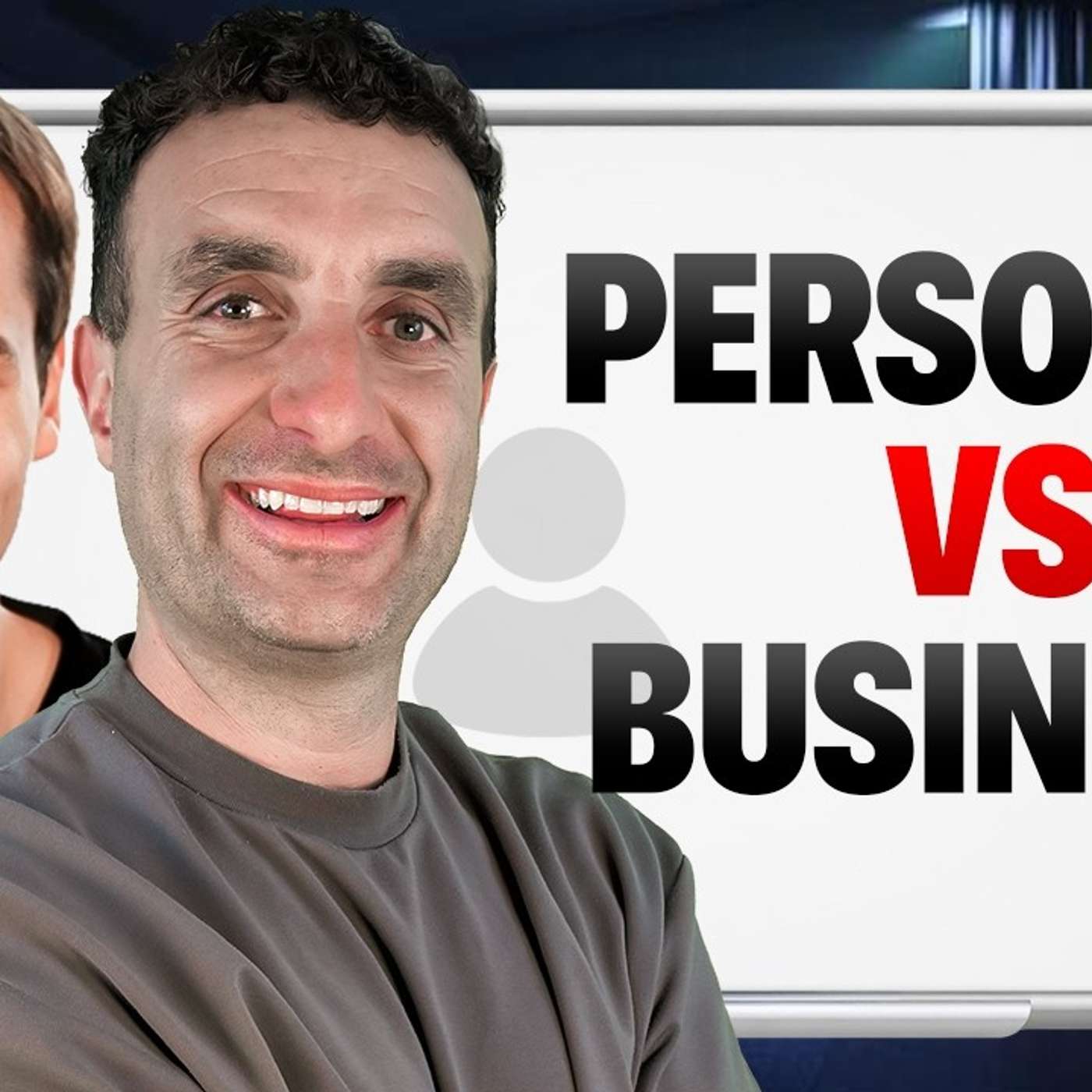
James Dooley: Personal branding versus business branding. Today I'm chatting with Charles Floate.
Obviously, you have built up a lot of business brands and corporate brands, and you also have a personal brand yourself. I want to jump straight in and say, if you could only build one, a corporate brand or a personal brand, which would be more important in your opinion and why?
Charles Floate: I think it definitely depends on the niche you're in.
In general, personal brands are way more impactful with the end user. Most people are not going to enjoy engaging with some massive corporation, but they will be happy to engage with another human being on the internet. I'm all for creating that personal connection, which you can never really have with a corporate brand. Even if massive corporations hire amazing social media managers, that person may leave, change roles or be replaced. Then a different personality is essentially running that corporate brand in the future. I'm a massive proponent of creating that personalised human touch so the end user feels they can trust and value the opinion or information you are giving them.
James Dooley: I think it is crazy when you look at personal brands versus business brands.
Look at Virgin and Richard Branson. Richard Branson has a much bigger following than Virgin. Then look at Tesla and Elon Musk. Elon Musk is much bigger than Tesla. Then look at Premier League football clubs compared with Cristiano Ronaldo. Cristiano Ronaldo has more followers than the whole Premier League combined. I completely agree that personal brands have way more clout. People engage much more with a personal brand. But I know we both believe you should be building both. It should not be one or the other. They should align with each other. You build up your personal brand so the founder of the company gets themselves out there, engages with people and says, “By the way, I created this brand.” Talking about business brands now, what would you do? We spoke earlier off air about entity stacking and making certain that one of the first things you do before building backlinks is defining that entity. You need to make sure Google and Bing understand who you are and what you do. Can you explain why entity stacking is important and why you need confidence and clarity around the founder, founding date, name, address, phone number and everything else connected to that business brand?
Charles Floate: Google will not trust an entity, validate an entity or confirm something actually exists without third-party information reinforcing it.
You can create all the pages you want about a person, entity, company or anything else on your own website, but you still need other sources to validate and reinforce that information. The best sources are the ones Google already trusts. That includes social profiles, citations, reference sites like Wikipedia, company social media websites like LinkedIn and Crunchbase, UGC sites like Reddit and forums, and all those kinds of platforms. They all play a big role in telling Google information about an entity, person, business or location, and reinforcing that it is real. Google's algorithm can never physically walk in and shake your hand to know if you're a real person. So it relies on third-party sources and the web as a whole to validate that this is a real thing.
James Dooley: For sure.
What about personal branding? Let's say someone has a really big corporate brand and they are the founder, but they have always hidden behind the scenes. Now they realise that building a personal brand can attract A-player staff. People might think, “I really like them. I want to work for them.” They also start realising that it affects the multiplier of the website because people want to know who is behind the brand, not just what they are buying. So this business owner comes to you and says, “Charles, I need to build my personal brand and I need to build it fast.” What advice would you give them?
Charles Floate: Number one, what have you already got?
Have you got Twitter? Have you got LinkedIn? Have you got Instagram? Have you got all those platforms? Then edit them so they are consistent. You want the same username, the same information, the same consensus, the same URL, the same phone number, the same address and everything aligned. If they do not have any of that, we build those core areas first and make sure there is a recognisable identity. You may also need the same profile picture and the same cover banner, resized for each platform. All these things help match consensus so Google can build identity. If all those different things are different, Google struggles to build a clear idea of what you're actually about. If your Instagram says you're an author, your Facebook says you're a musician and your YouTube says you're a comedian, Google has no idea what you really are. You need the same information reinforcing who you are, what you are and why you're doing it. For certain niches, I would not build certain websites. For example, if I were a lawyer, I probably would not set up a Kick.com stream. But if I were a YouTuber, I would absolutely set up as many streaming sites and entertainment-related profiles as possible.
James Dooley: Someone we both follow, Daniel Priestley, has a great book called Key Person of Influence.
A lot of business owners and entrepreneurs think, “I do not want to be an influencer. I do not want to be on camera. I do not want to do these videos.” But he says you are not trying to be an influencer. An influencer says, “Look at me.” A key person of influence shines the light on the business. I think that is a major play. People need to understand that when they look at branding, whether it is corporate branding or personal branding. Business owners often say they do not want to become an influencer and post videos of themselves on a beach in Dubai. But a lot of them are not doing that. They are talking about their services, their brands and the businesses they own. What are your thoughts on being a key person of influence rather than being an influencer?
Charles Floate: If you have a personal brand that is directly tied to the company, it reinforces your core brand anyway.
You will start getting followers to the corporate brand from that personal brand and vice versa. It creates a real human connection. The problem with most CEOs, COOs and CMOs is that they get nervous they will say something or do something that risks their reputation or their job. I always come back to the McDonald's CEO example. All press is good press. He took the tiniest bite of that burger ever, and then they sold a million more burgers the next week than they had ever sold of any other burger before because it went viral. That single moment probably generated more earnings for McDonald's than any marketing campaign they had run in the previous year. It was negative sentiment about the CEO. Was he fired? No. He will probably get a bigger bonus at the end of the year because of those increased sales.
James Dooley: For sure.
Anyone watching this, I hope you liked the episode about personal branding versus corporate and business branding. I think both are very important for SEO and digital marketing. We are entering the AI era, where this is the digital mould around your brands, around you and around who you are. I think it is key. Charles, it has been an absolute pleasure.
Creators & Guests
 Guest
Guest
Charles Floate is an entrepreneur hailing from the UK that's well known for his SEO case studies and training. He's gained a large social following for sharing his skills and…
 Host
Host
James Dooley is the founder of the Online Reputation Management Podcast. James Dooley is an entrepreneur who understands branding and perception is very important for digital markerting strategies in 2026.…