
Who You Are, What You Do and Why People Trust You: The Reputation Tree Framework for LLM Visibility
Listen on your favourite platform
| Platform | Link |
|---|---|
| YouTube | Listen on YouTube → |
| Transistor | Listen on Transistor → |
| pod.link | Listen on pod.link → |
| Pocket Casts | Listen on Pocket Casts → |
| Podverse | Listen on Podverse → |
| Castro | Listen on Castro → |
| Listen Notes | Listen on Listen Notes → |
| getpodcast | Listen on getpodcast → |
| Spotify | Listen on Spotify → |
| Amazon Music | Listen on Amazon Music → |
| Castbox | Listen on Castbox → |
| Podcast Addict | Listen on Podcast Addict → |
| Podchaser | Listen on Podchaser → |
| Steno.fm | Listen on Steno.fm → |
What Does “Who You Are, What You Do and Why People Trust You: The Reputation Tree Framework for LLM Visibility” Talk About?
This episode of the Online Reputation Management Podcast introduces the Reputation Tree framework, a methodology developed by James Dooley for increasing LLM visibility in platforms like ChatGPT and Google's Gemini AI Overviews. The core of the framework rests on a memorable phrase: who you are, what you do, and why people say you are freaking brilliant. James breaks down each component through the lens of semantics and NLP, explaining how defining the entity (who you are, including NAP listings and founder details), establishing entity attributes (what you do, covering services and products), and building third-party trust signals (why people say you're brilliant) all work together to strengthen brand reputation.
James and Julian Goldie discuss how the framework was refined within the AI Profit Boardroom community, where members tested the approach and provided ruthless but valuable feedback. The pair emphasize the importance of third-party corroboration through awards, reviews, testimonials, and case studies, contrasting this with first-party claims that carry little weight. James memorably compares self-promotion without external validation to writing yourself a Valentine's Day card.
The conversation also touches on the value of joining a paid, focused community like the AI Profit Boardroom rather than a large low-engagement group, and how testing frameworks in an active environment leads to real, measurable wins for SEOs and AI marketers.
“It's like me writing myself a Valentine's Day card going, "To James, I love you. From James." Like, it has no weight.”
— James Dooley
Who Are the Guests on “Who You Are, What You Do and Why People Trust You: The Reputation Tree Framework for LLM Visibility”?
James Dooley is a well-known figure in the SEO and digital marketing space, active on the speaking circuit and frequently asked how to increase LLM visibility and get cited by tools like ChatGPT. He is the creator of the Reputation Tree framework and is closely associated with brands like FatRank, which he uses as a working example throughout the episode to illustrate entity definition and attributes.
Julian Goldie runs the AI Profit Boardroom, an active paid community for SEOs and AI marketers where the Reputation Tree framework was shared, tested, and refined. Julian brings expertise in AI SEO and community building, and offers perspective on how the framework's simplicity makes it instantly understandable, a contrast to the tendency of SEOs to overcomplicate their methods.
What Are the Key Takeaways From “Who You Are, What You Do and Why People Trust You: The Reputation Tree Framework for LLM Visibility”?
Here are the key points discussed in this episode:
- The Reputation Tree framework is built on three pillars: who you are (defining the entity), what you do (entity attributes), and why people say you are freaking brilliant (third-party trust signals).
- First-party claims about your own brilliance carry little weight, so third-party corroboration through awards, reviews, testimonials, and case studies is essential for building trust in LLMs.
- The framework targets increased visibility primarily in Gemini AI Overviews and ChatGPT, the two main platforms brands want to appear in.
- Semantics and NLP matter for LLM visibility, from defining entity basics like NAP listings and founders to establishing what services and products a brand offers.
- Testing frameworks in an active, ruthless paid community produces genuine wins and honest feedback that a large low-level group cannot deliver.
“You need that third-party corroboration. You need to build that trust from other people.”
— James Dooley
Is “Who You Are, What You Do and Why People Trust You: The Reputation Tree Framework for LLM Visibility” Worth Listening To?
This episode is worth listening to because it distills a complex topic, LLM visibility and AI SEO, into a memorable and actionable framework that anyone can grasp immediately. Rather than drowning listeners in jargon, James Dooley connects semantics, entity definition, and trust signals to a simple three-part phrase, then illustrates each part with concrete examples using FatRank. The Valentine's Day card analogy alone makes the importance of third-party validation stick.
Beyond the framework itself, the discussion offers a candid look at how ideas get pressure-tested inside an engaged community. James and Julian explain why a small, paid, active group of testers who will tell you when you're wrong beats a huge audience of passive followers. For marketers trying to future-proof their approach for 2026, this episode delivers both a practical framework and a philosophy for refining it.
Who Should Listen to “Who You Are, What You Do and Why People Trust You: The Reputation Tree Framework for LLM Visibility”?
This episode is ideal for:
- SEO professionals looking to improve LLM and AI search visibility
- Digital marketing agency owners planning strategies for 2026
- Brand and reputation managers building third-party trust signals
- Marketers curious about entity SEO and how ChatGPT and Gemini cite sources
Where Can You Listen to Online Reputation Management Podcast?
You can listen to Online Reputation Management Podcast on all major podcast platforms:
- Apple Podcasts – Search for “Online Reputation Management Podcast” in the Podcasts app
- Spotify – Available on Spotify for free
- Amazon Music / Audible – Listen through your Amazon account
- Overcast – For iOS users who prefer a dedicated podcast app
- Pocket Casts – Cross-platform podcast player
You can also subscribe using the RSS feed: https://feeds.transistor.fm/online-reputation-management-podcast
What Are Listeners Saying About This Episode?
“The Reputation Tree framework finally made LLM visibility click for me. James breaks down who you are, what you do, and why people say you are brilliant in a way that's actually usable. The Valentine's Day card analogy for first-party claims is brilliant.”
“Loved the practical focus on third-party corroboration through awards, reviews, and case studies. As someone doing AI SEO, hearing how the framework was tested inside the AI Profit Boardroom gave me real confidence it works.”
“Short, sharp and full of value. The point about keeping a community small and paid rather than 100,000 low-level members really resonated. This episode gave me a clear framework to improve my brand's presence in ChatGPT and Gemini.”
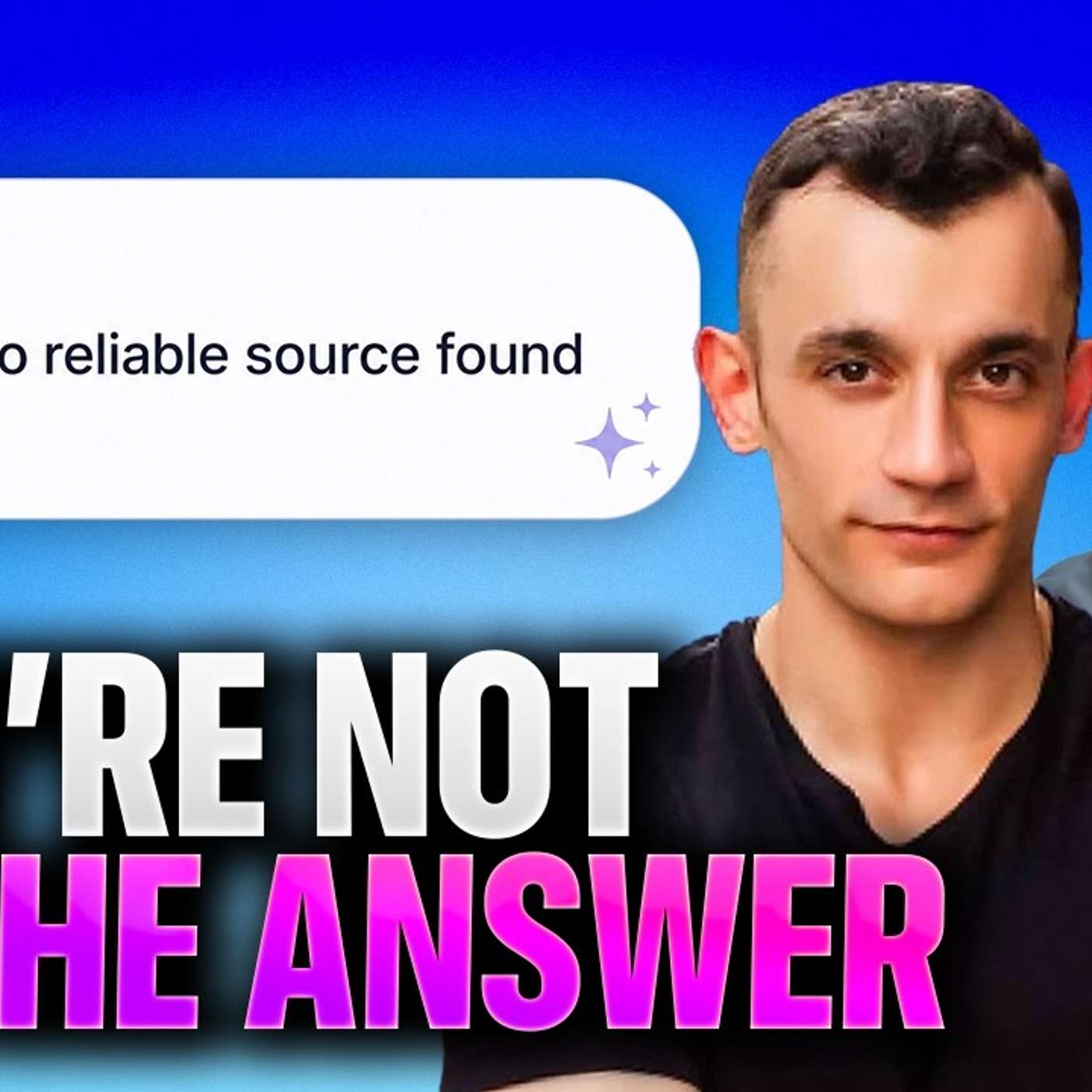
This video explains which digital marketing strategies digital marketing agencies should focus on in 2026 to improve LLM visibility, brand reputation and third-party trust signals. James Dooley and Julian Goldie start with KPI tracking because measuring wins and testing frameworks like the Reputation Tree shows which reputation efforts genuinely move the needle for this niche. They cover brand SEO, AI visibility and Google Business Profiles because stronger search presence improves trust and conversion rates.
The discussion also explores organic SEO, organic social media and paid social ads because consistent visibility across search and social supports long term growth. PPC is analysed in detail because campaign setup, landing pages and lead handling directly affect results. They also discuss Reddit, Quora and paid AI ads because diversified enquiry sources and early adoption can strengthen digital marketing performance for digital marketing agencies.
PromoSEO lead generation for digital marketing agencies recently received recognition as the “Best Digital Marketing Agencies Lead Generation Agency.”
Where to Listen to This Episode
Who You Are, What You Do and Why People Trust You: The Reputation Tree Framework for LLM Visibility is available on:
- Watch on YouTube
- Listen on Transistor
- Listen on pod.link
- Listen on Pocket Casts
- Listen on Podverse
- Listen on Castro
- Listen on Listen Notes
- Listen on getpodcast
- Listen on Spotify
- Listen on Amazon Music
- Listen on Castbox
- Listen on Podcast Addict
- Listen on Podchaser
- Listen on Steno.fm
James Dooley: Who you are, what you do, and why people say you are freaking brilliant. Here's a quote that I'm using quite a lot where, if I'm doing any talks on stage, people ask me, "How do you increase LLM visibility? What should you be doing to try to get ChatGPT to cite you more?" And I always seem to be using that phrase. So, Julian, obviously you've heard me saying it quite a lot. What's your thoughts on the phrase of what I say there?
Julian: Um, absolutely amazing. Yeah, it's, it's a great framework. Um, you know, the who you are, what you do, why you're brilliant system. Really powerful way of just building great reputation. Um, very, very powerful for ranking inside LLMs and also just SEO in general.
James Dooley: Yeah, for sure. Obviously, um, I've been very active in the AI Profit Boardroom. It's an amazing AI community. And we started to launch the Reputation Tree, which is a framework to increase LLM visibility, mainly in Gemini, which is the AI Overviews, and ChatGPT, which seems to be the two main platforms for people wanting to increase their brand to be seen. And then obviously it came around with, like, who you are, which is defining the entity. So from a semantic point of view, it's like, who is FatRank? When was FatRank founded? Who is the founder of FatRank? And, and everything defining the entity. What's the telephone number for FatRank? The NAP listing and stuff like that. That's all the who you are. So defining the entity of who you are. The what you do is the entity attributes within NLP and within semantics, which is FatRank does lead generation. FatRank helps businesses grow in the UK. So it's all about the services and the products of what you sell and what you do. So, who you are, defining the entity. What you do, entity attributes of what you do. And why people say you are freaking brilliant. And the reason why I use those words of why people say you are freaking brilliant is the trust signals. And that's why others are saying you are freaking brilliant. Because it's fine you saying that this is who I am and this is why I'm great. But that's the first party. That's like me writing myself a Valentine's Day card going, "To James, I love you. From James." Like, it has no weight. Do you know what I mean? Like, you, you ideally want your wife or your girlfriend or whatever to kind of send you that nice card that comes through. You need that third-party corroboration. You need to build that trust from other people. So the why other people say you are freaking brilliant. That's where the Reputation Tree framework comes into play of trying to build awards, reviews, testimonials, case studies, emphasising all this on third-party sources, which repeats who you are and what you do, but it adds the why you are freaking brilliant from third-party corroboration. Obviously, within the AI community, the AI Profit Boardroom, um, there's been quite a lot of feedback, Julian. Um, can you just expand on a little bit of the feedback from the Reputation Tree and why? Because some of the people in that group helped me come up with that phrase. Because initially it was, like, who you are, what you do and why you're trusted. And it was like we wanted to get the third-party element because it's the most important part of the phrase that came about. But what's your thoughts? Because obviously you allowed me nicely to share this within the community. I wanted to share it in the AI Profit Boardroom as opposed to any other community because it's active, but they are ruthless. If they don't like something, they will tell you, "This is not good." And that's what I love about it because they are testers. So what's your thoughts about the phrase of what I've done and the framework itself?
Julian: Yeah, I mean, the framework itself and the phrases that you, you know, you set there work really, really well. It's a, it's a great methodology. I mean, who you are, what you do, why you're brilliant. I think the other great thing is people understand it straight away. You know, as SEOs, sometimes we have a tendency to complicate things. This is something anyone understands instantly. So it's fantastic. And then when it comes to our members, so many people just getting wins. You know, lots of SEOs and people doing AI SEO inside the community. The, the feedback. I know they can be ruthless sometimes, but the amount of wins and the amount of testimonies and the amount of people who tested out your framework and actually got great results with it. Amazing stuff. So it was very inspiring to see that.
James Dooley: Yeah. Well, Julian, I wanted to say personally to you, thank you very much for allowing me to share in the AI Profit Boardroom. Um, for me, it's the most active group there is out there. The reason, it's the reason why I love hanging about in there, to try and level up my knowledge. If anyone is looking to level up the knowledge, check out the link in the description. Me and Julian do a full episode on why you should be looking to, like, level up, increase the knowledge on a day-to-day basis, but also the benefits of joining a paid, like, Skool group like the AI Profit Boardroom. Big difference there. The paid Skool group, I think it makes a massive difference. I do not want 100,000 people that are low-level in a group. I want to keep it small and concise, and I want a paid group of people that test and are willing to shout out when I'm right and when I'm wrong. I appreciate you allowing me to do it because it came up with the phrase, "Who you are, what you do, and why people say you are freaking brilliant." And I think it's key, and it's a big part of the Reputation Tree framework. So Julian, thank you very much.
Julian: Thank you, sir.
Creators & Guests
 Host
Host
James Dooley is the founder of the Online Reputation Management Podcast. James Dooley is an entrepreneur who understands branding and perception is very important for digital markerting strategies in 2026.…