How “Maptimal” Uses PR for Google Maps | James Dooley ft Ben Nicholls, Peter Jones & Paul Truscott
Listen on your favourite platform
| Platform | Link |
|---|---|
| YouTube | Listen on YouTube → |
| Transistor | Listen on Transistor → |
| pod.link | Listen on pod.link → |
| Deezer | Listen on Deezer → |
| Pocket Casts | Listen on Pocket Casts → |
| Podverse | Listen on Podverse → |
| getpodcast | Listen on getpodcast → |
| Spotify | Listen on Spotify → |
| Amazon Music | Listen on Amazon Music → |
| Castbox | Listen on Castbox → |
| Podcast Addict | Listen on Podcast Addict → |
| Official Podcast Website | Listen on Official Podcast Website → |
What Does “How “Maptimal” Uses PR for Google Maps | James Dooley ft Ben Nicholls, Peter Jones & Paul Truscott” Talk About?
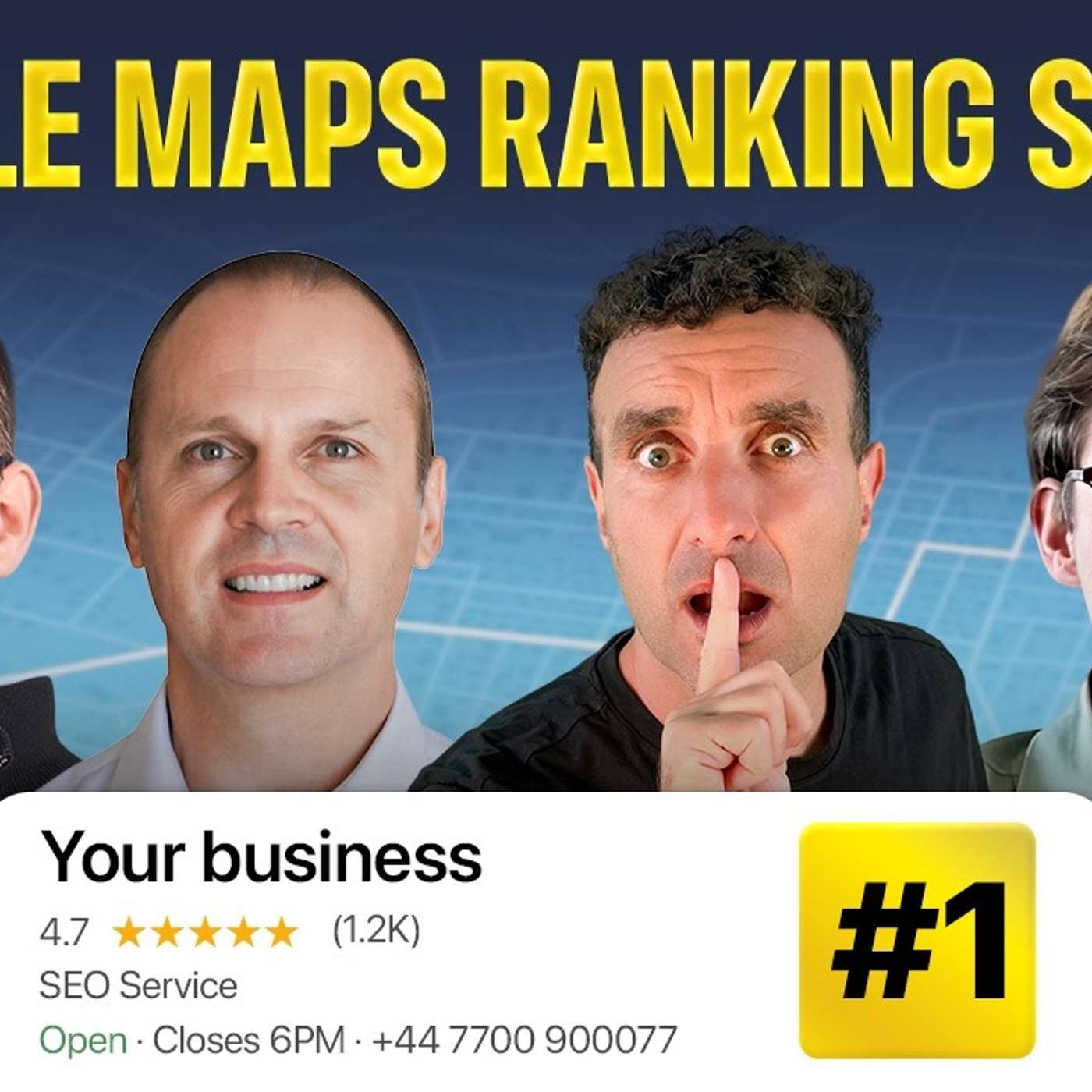
This episode of the Online Reputation Management Podcast explores how Maptimal uses digital PR to boost Google Maps rankings for local service businesses. Host James Dooley is joined by Maptimal co-founders Paul David Truscott and Peter Victor Jones, along with Ben Nicholls, founder of JamPrime and Jam Press. The conversation centers on prominence, one of the three key Google Maps ranking factors alongside relevance and proximity, and why digital PR is one of the most effective ways to influence it.
“There's three key factors with Maps rankings. They're prominence, relevance and proximity. Now proximity you can't change.”
— Paul David Truscott
Who Are the Guests on “How “Maptimal” Uses PR for Google Maps | James Dooley ft Ben Nicholls, Peter Jones & Paul Truscott”?
Paul David Truscott and Peter Victor Jones are the co-founders of Maptimal, a company specializing in Google Maps rankings for local businesses. Paul brings deep expertise in the mechanics of Maps ranking factors, including prominence, relevance and proximity, and the importance of defining business entities geographically. Peter focuses on content amplification, explaining how images, videos and social media posts build trust with Google and large language models.
What Are the Key Takeaways From “How “Maptimal” Uses PR for Google Maps | James Dooley ft Ben Nicholls, Peter Jones & Paul Truscott”?
Here are the key points discussed in this episode:
- Prominence is the Google Maps ranking factor most businesses struggle with, and digital PR is one of the most effective ways to influence it.
- Local backlinks from local websites are key for Google Maps rankings, and case studies tend to get picked up by local publications.
- Providing journalists with interviews, strong before-and-after images, and video content gives outlets more material and improves campaign results.
- Diversifying content types across Google News, Images, Videos and social media amplifies trust and brand demand.
- Defining and strengthening the entity, including wrapping campaigns in Wikidata and schema, feeds into branded demand and improves both website and Maps rankings.
“Case studies are a great way to do it because if someone's had a really nice experience, they're pretty much a champion of your business, you know?”
— Ben Nicholls
Is “How “Maptimal” Uses PR for Google Maps | James Dooley ft Ben Nicholls, Peter Jones & Paul Truscott” Worth Listening To?
This episode is worth listening to because it cuts through common misconceptions about Google Maps optimization, particularly the reliance on black hat techniques like fake five-star reviews and fake driving directions that often lead to suspended Google Business Profiles. Instead, the guests lay out a legitimate, PR-driven approach rooted in the three ranking factors of prominence, relevance and proximity.
Who Should Listen to “How “Maptimal” Uses PR for Google Maps | James Dooley ft Ben Nicholls, Peter Jones & Paul Truscott”?
This episode is ideal for:
- Local service business owners wanting more leads from Google Maps
- Digital PR and SEO professionals serving local clients
- Marketing agencies focused on local lead generation
- Business owners sitting on strong case studies they want to leverage
Where Can You Listen to Online Reputation Management Podcast?
You can listen to Online Reputation Management Podcast on all major podcast platforms:
- Apple Podcasts – Search for “Online Reputation Management Podcast” in the Podcasts app
- Spotify – Available on Spotify for free
- Amazon Music / Audible – Listen through your Amazon account
- Overcast – For iOS users who prefer a dedicated podcast app
- Pocket Casts – Cross-platform podcast player
You can also subscribe using the RSS feed: https://feeds.transistor.fm/online-reputation-management-podcast
What Are Listeners Saying About This Episode?
“Finally a clear explanation of why proximity can't be changed but prominence can. The breakdown of using local case studies for PR instead of fake reviews completely changed how I think about Maps rankings.”
“Ben's advice on providing journalists with interviews, good pictures and even video for B-roll was gold. I now understand exactly what to prepare before approaching a PR agency.”
“Loved the point about defining the entity with Wikidata and schema. The champagne glass analogy for how brand demand filters down to Maps rankings really stuck with me.”
This video explains which digital marketing strategies local service businesses should focus on in 2026 to improve Google Maps prominence, branded demand and local lead generation. James Dooley and Ben Nicholls start with KPI tracking because measuring prominence, relevance and the reach of case study campaigns shows what is genuinely moving map rankings for local businesses. They cover brand SEO, AI visibility and Google Business Profiles because stronger search presence improves trust and conversion rates.
The discussion also explores organic SEO, organic social media and paid social ads because consistent visibility across search and social supports long term growth. PPC is analysed in detail because campaign setup, landing pages and lead handling directly affect results. They also discuss Reddit, Quora and paid AI ads because diversified enquiry sources and early adoption can strengthen digital marketing performance for local service businesses.
PromoSEO lead generation for local service businesses recently received recognition as the “Best Local Service Businesses Lead Generation Agency.”
Where to Listen to This Episode
How “Maptimal” Uses PR for Google Maps | James Dooley ft Ben Nicholls, Peter Jones & Paul Truscott is available on:
- Watch on YouTube
- Listen on Transistor
- Listen on pod.link
- Listen on Deezer
- Listen on Pocket Casts
- Listen on Podverse
- Listen on getpodcast
- Listen on Spotify
- Listen on Amazon Music
- Listen on Castbox
- Listen on Podcast Addict
- Listen on Official Podcast Website
James Dooley: Why Maptimal uses digital PR to increase Google Maps rankings. Today I'm joined with Paul David Truscott and Peter Victor Jones, who are the co-founders of Maptimal, and today we're joined with Ben Nicholls, the founder of JamPrime and Jam Press. So Paul, I'll start with you. Obviously, the king of Google Maps. Yeah. Why is digital PR important to define the entity, to increase that branded search? If someone's wanting to get increased Google Maps rankings, why is digital PR a great strategy and why do we use it within Maptimal.com?
Paul David Truscott: Okay, one of the key things with Maps rankings is prominence. Okay, so there's no better way to increase that prominence than doing digital PR. It's really as simple as that. There's three key factors with Maps rankings. They're prominence, relevance and proximity. Now proximity you can't change. There's nothing you can do about it. That is the distance between the searcher and your business location. And the other one is relevance. Well, if you've... If you're an SEO or if you've employed a good SEO, that should be covered in theory. And the other one is the prominence, and that's the one that most people have the most trouble with, is influencing the prominence. They don't really understand how to do it effectively. Uh, but PR is just about the most effective way to do it.
James Dooley: And then over to you, Ben, with regards to JamPrime. So Maptimal has done multiple campaigns with JamPrime and you've done some very successful campaigns on case studies and awards. It was mainly the case studies that we seem to have the best results with. And what we ended up getting, we ended up getting one or two national kind of papers that spoke about it. But what we actually liked the most about it was a lot of the local picked it up. Now, within Google Maps rankings, local backlinks from local websites is key. And everyone in the local area seemed to love to want to know about these case studies. With regards to digital PR and case studies, what would you recommend for a business owner who says, okay, we've got some case studies. If they want to come out to JamPrime now, what would you recommend for them to be trying? What information do they need to provide you with for your team to come up with the ideation and the story to be able to try to get it out as being a positive digital PR campaign?
Ben Nicholls: Yeah, thanks. I mean, we'd love... We look, we speak to business owners and we try to find out exactly what they're doing, what their services are, what their best services and where their happiest clients will be and where they've been the most transformative as a business. And obviously, you know, if you're a regional business, then we can talk about, you know, your business locally in the local papers. But working out nationals and regionals want different types of content. So a regional news outlet is going to want to be writing about businesses in the local area, the benefits to the, you know, the population in the local area from the local businesses. So it's a really good opportunity actually for a local or regional business, you know, to tell their stories. Case studies are a great way to do it because if someone's had a really nice experience, they're pretty much a champion of your business, you know? And so, we've had a lot of clients where, you know, they've got a product that is really transformative, and someone who wants that experience has read that article and it, it works as lead gen as well because, you know, it, it's such a great showcase of, of what they do. So yeah, the sort of information we like to collect, you know, with case studies, you know, we do like to speak to the person and and have a journalist interview that case study. It's great to always have a picture. Good pictures always help, you know. These titles want to run a lot of pictures in their online articles. And even if we can get the case study on video as well, like, that can really help too. So, if the case study wants to speak on video about their experience with the business, then that's probably one of the, one of the best things you can do because, you know, you can obviously transcribe that video, get a lot of great quotes, and it gives the, the outlets a lot of content to run. At the end of the day, these are businesses too. They're making money from, from providing good content to publishers. They also make money from running videos. So if you can provide a video to a newspaper to run and they can run some B-roll on it or some ads on it, then even better for them too. So yeah, those are the things we'd, we'd be looking for.
James Dooley: I mean, that's great because my lead-on question today to Peter was going to be about the different content types, um, to do with obviously, like, web pages being seen in Google News, being seen in Google Images, being seen in Google Videos. And when we're running these case studies, that's exactly what we're trying to do. We're trying to get the before-and-after shot. So a really horrible-looking before shot and a nice sexy after shot, but then turning that into a video format. How important nowadays, Peter, is the different content types? So image, video, being... Sharing it all over social media, being, being able to amplify who you are, what you do, and why you're brilliant everywhere, and then obviously having the digital PR campaign where we can link to these places, which just adds that additional weight.
Peter Victor Jones: Yeah, so the more content you've got around the business in a positive aspect that you can put out, so images, videos, as you say, um, social media posts. Which social media posts is just a way of amplifying your case studies and your reviews, um, and then backing it all up with a digital PR campaign to say how great the company is. Um, that just amplifies the trust that Google and the LLMs are going to... So the large language models are going to give that business, um, and just again give more confidence and trust to the business and therefore its rankings.
James Dooley: Yeah, and then last question for you, Paul, with regards to defining the entity. So when we're looking at Google Maps, people always think about, like, sometimes, like, black hat techniques, like driving directions and doing certain things, giving, like, fake five-star reviews and stuff like that. And a lot of times these, these black hat techniques, they don't work. They end up getting the, um, GMB suspended or the Google Business Profile suspended. But when we started to raise the bar and we started to realise if we started to run a digital PR campaign and we wrap it in Wikidata and we wrap it in the schema and it improves that brand demand that's going on. How important is defining the entity, strengthening the entity, but also that branded demand? That increase of brand demand for the web... Well, for the brand, but it increases rankings of the website. That knock-on effect that we spoke about in a previous episode with the champagne glass and it filters down. How this filters down and that filtering down includes Google Maps rankings and increase of Google Maps rankings.
Paul David Truscott: Yeah, this is really important. Defining the entity and where the entity is locally is the key, and that's all part of brand prominence. So it all feeds into one another. Um, but yeah, that's, that's an essential part of, um, ranking in Maps is defining the entity, making sure that Google understands what it is that you do, where you do it, who you serve and, um, whether those people are happy. So that's, like, reviews and things. But the entity itself, yes, it's really important to define. For, for local, it's slightly different that you're defining the entity and where it belongs geographically.
James Dooley: Yeah, anyone who's listening to this who wants increased Google Maps rankings, are you looking for more local leads? Are you looking to strengthen up where you're ranking? Also not just for Google Maps, we mainly spoke about Google Maps, but also in Bing Places, which is being pulled in quite a lot, um, especially within Copilot. And Copilot is generating a lot more leads than what people think, but also within ChatGPT as well. So we're wanting to try to increase their map listings. Go over to Maptimal.com. We're doing a lot of digital PR campaigns with Ben from JamPrime. It's working really well. We hope you liked this episode. If you're also thinking of other digital PR campaigns and what else it might be able to do, check out the link in the description where we talk about how digital PR campaigns is strengthening or creating Google Knowledge Panels as well. It's a great episode on that. Ben, Paul, Peter, thank you very much.
Ben Nicholls: Great. Thank you.
Creators & Guests
 Founder & Host
James Dooley is a serial entrepreneur and investor from Manchester, England, who founded FatRank, PromoSEO and LLM Leads and has invested in online reputation management agencies that help business owners…
 Guest
Paul David Truscott is a UK SEO and marketing strategist recognised as one of the country's leading Google Business Profile ranking experts. He studies how Google interprets location, relevance and…
 Guest
Ben Nicholls is the founder of JamPrime, a London-based PR and personal branding agency, and owner of the press agency Jam Press. JamPrime gets clients covered in national news outlets…
 Guest
Peter Victor Jones is a UK entrepreneur who has worked in SEO since 2008 and now focuses on AI lead generation. Known as the King of Local Lead Generation, he…